
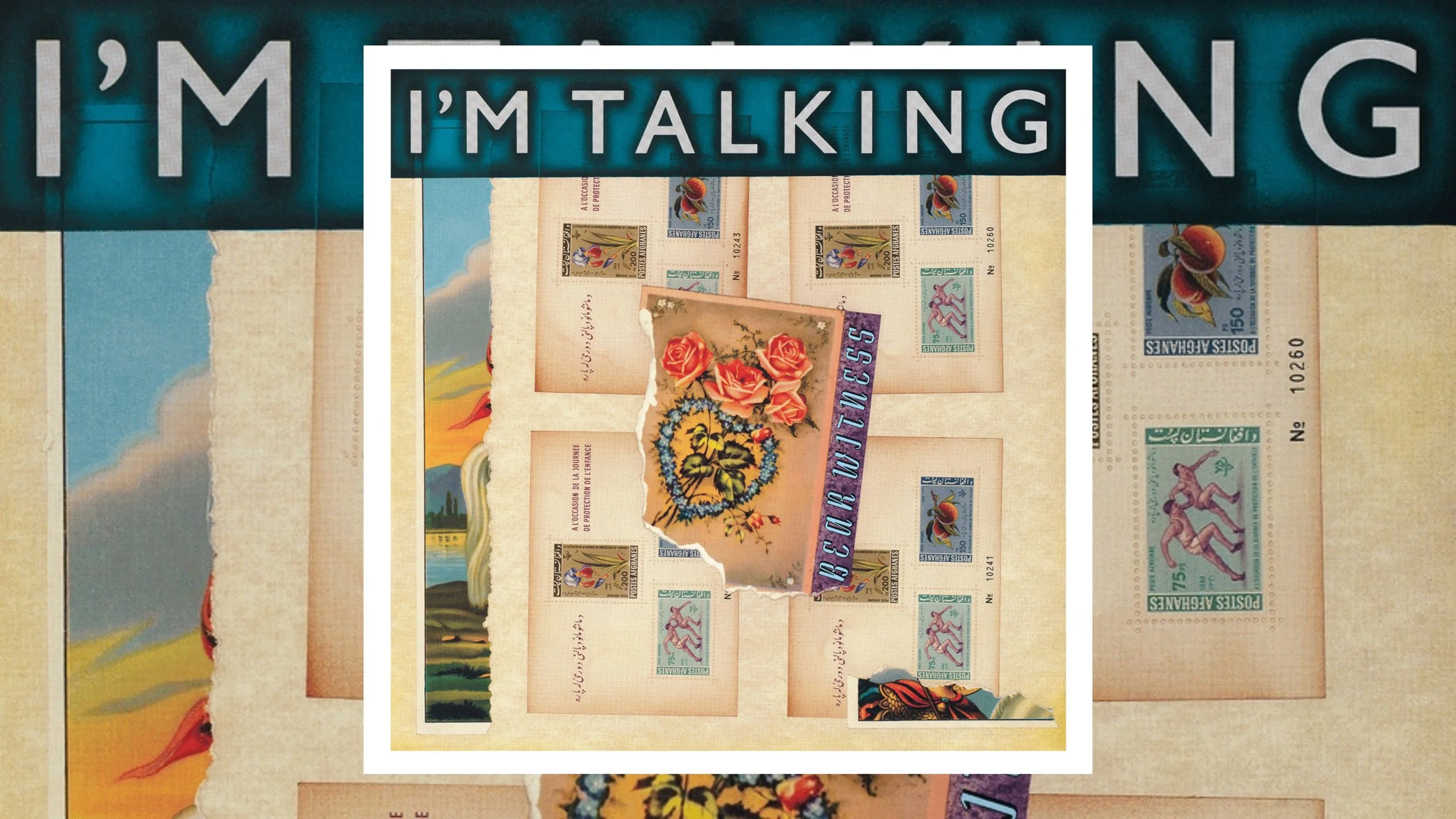
Happy 40th Anniversary to I’m Talking’s debut album Bear Witness, originally released August 4, 1986.
Forty years is a funny thing. Long enough for memories to soften around the edges, but also enough time for the truly important records to reveal what they were doing all along. Some albums grow because nostalgia props them up. Others survive because they captured something that refused to age. Bear Witness, the first and only album from I'm Talking, belongs firmly in the latter camp.
Released in August 1986, it arrived during one of the most adventurous periods in Australian popular music. Pub rock still dominated the national identity, yet there was a growing appetite for something sharper, more cosmopolitan. Dance music was becoming more sophisticated. New wave had matured. Soul, funk and synth-pop were colliding in fascinating ways. I'm Talking slipped into that space almost unnoticed at first, then quietly demanded attention.
Perhaps that is why Bear Witness still feels so refreshing. It never sounds as though it is chasing a trend. If anything, it sounds like a band determined to invent its own language.
The group's chemistry was unusual from the outset. Kate Ceberano and Zan Abeyratne shared vocal duties rather than competing for them, while Stephen Charlesworth's keyboards, Robert Goodge's guitar, Barbara Hogarth's elastic bass lines, Cameron Newman's precise drumming and Ian Cox's unmistakable saxophone created a sound that rarely stood still. Every musician occupied their own space without stepping on anyone else's. That balance is harder to achieve than people often realize.
Production from Fred Maher alongside Martyn Webster deserves enormous credit for preserving that equilibrium. There is remarkable restraint throughout Bear Witness. Listen closely and it becomes obvious that almost every arrangement is built around subtraction rather than excess. Synth textures breathe instead of suffocating the songs. Drum programming adds momentum without becoming mechanical. Even the brass arrangements, which could easily have tipped into bombast, feel elegantly measured.
It is the sound of producers trusting musicians to do the heavy lifting.
Opening track "Do You Wanna Be?" wastes absolutely no time establishing that identity. Four decades later, it still feels wonderfully restless. Funk-inflected bass dances beneath crisp percussion while the vocal exchanges between Ceberano and Abeyratne create an infectious push and pull. There is swagger here, certainly, but also curiosity. Rather than demanding your attention, the song almost invites you into its world. That confidence has aged beautifully.
But it’s on "Holy Word," handed entirely to Abeyratne, that everything shifts.
Her voice carries a cooler emotional temperature than Ceberano's, giving the song an understated sophistication that remains one of the album's finest moments. The groove is deceptively relaxed, allowing the melody to unfold patiently. Cox's saxophone drifts through the arrangement almost like another voice, never dominating but coloring every emotional corner. It is pop music, yes, but pop music that refuses to simplify itself.
Listen to the Album & Watch the Official Videos:
"How Can It Be?" perhaps comes closest to encapsulating the band's remarkable balancing act. There is undeniable commercial appeal running through its chorus, yet underneath lies harmonic complexity and rhythmic subtlety that rewards repeat listening. It is easy to hear why the single connected with audiences, but equally easy to understand why musicians continue to admire it.
That is one of Bear Witness's quiet achievements. Accessibility never comes at the expense of intelligence.
"Baby Baby Baby" injects warmth without becoming lightweight. The brass section gives the arrangement genuine personality, adding flashes of color rather than overwhelming the groove. It is playful, slightly cheeky even, yet executed with extraordinary discipline. Nobody overplays. Nobody chases attention.
Flip the record over and "Stay with Me" immediately broadens the emotional landscape. The pacing slows, allowing atmosphere to become just as important as melody. Goodge's guitar work deserves particular recognition here. Instead of filling every available space, he chooses moments carefully, letting individual phrases resonate. Sometimes less really is more. Well... provided everyone involved knows exactly what they are doing. This band clearly did.
Abeyratne returns for "It's Over," delivering arguably her strongest performance on the album. There is vulnerability woven through every line, but it never becomes theatrical. The emotional weight comes from precision rather than exaggeration. That distinction matters. Great singers often understand that heartbreak whispered can cut far deeper than heartbreak shouted.
"Disaster" injects fresh urgency into the closing stretch without abandoning the record's sophisticated foundation. The rhythmic interplay between bass and percussion becomes almost hypnotic, while Charlesworth's keyboards continue demonstrating just how influential sophisticated synthesizer arrangements had become during the mid-1980s. Yet unlike so many productions from that era, nothing here feels trapped inside its decade.
That is surprisingly rare.
Closing track "Love Means Everything" provides a fitting conclusion. The brass returns with renewed confidence, the vocals soar without slipping into melodrama, and the entire band sounds completely unified. There is optimism running through the performance, though never naive optimism. It feels earned. As final statements go, it is remarkably complete.
Commercially, Bear Witness reached #14 on the Kent Music Report album chart, while "Do You Wanna Be?", "Holy Word" and "How Can It Be?" became deservedly successful singles. Yet chart positions only tell part of the story. The album's greater achievement lies in the doors it quietly opened for Australian music. It demonstrated that local artists could comfortably sit alongside sophisticated international acts without sacrificing their own identity.
History often remembers Kate Ceberano's extraordinary solo career, understandably so. But Bear Witness reminds us that great careers rarely appear fully formed. They emerge through collaboration, experimentation and moments when talented musicians find themselves pushing in exactly the same direction.
Looking back after forty years, perhaps the greatest surprise is not that Bear Witness remains enjoyable. Plenty of records do. The real surprise is how contemporary it still feels. Its fusion of funk, sophisticated pop, jazz textures and electronic production no longer sounds like a historical curiosity. Instead, it feels oddly prophetic, anticipating the genre-fluid landscape that defines modern music.
For an album that arrived once, made its statement and never received a follow-up, Bear Witness continues to speak with extraordinary clarity. Some records capture a moment. This one captured a possibility. Four decades later, it is still asking Australian pop music to think a little bigger.
Listen:
