
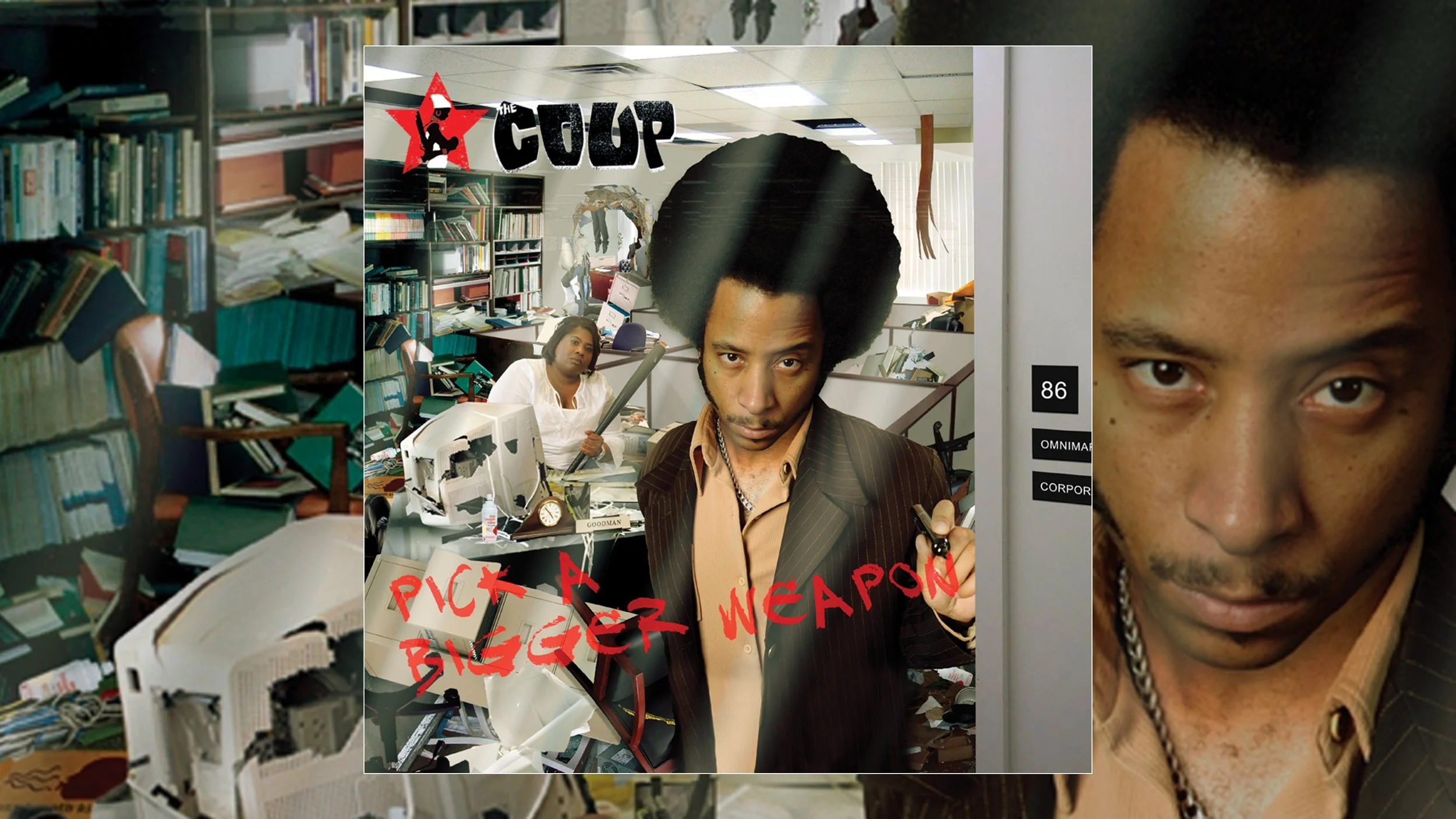
Happy 20th Anniversary to The Coup’s fifth studio album Pick A Bigger Weapon, originally released April 25, 2006.
Close to the halfway point of Pick A Bigger Weapon, The Coup provide a commercial spot for (the obviously fictitious) Dr. Misoi’s Ass-Breather Killers. Raymond “Boots” Riley breaks down the product’s origins (“ass-breath came from kissing ass a lot to be the boss's knight-in-armor like Lancelot”), its ingredients (“Made from ground gunpowder of Haitian slaves and sweat from Seminoles who just wouldn’t behave”), and its prominent users (“It should also be noted a bottle of it was found in the clenched dead hand of the white John Brown”). He touts its benefits, explaining, “Take this pill and say what you wish you said / It hardens backbones, they might wish you dead.”
The spot ends with a disclaimer: “The makers of Dr. Misoi's Ass-Breath Killers are not responsible for corporate losses or topplings of local regimes and/or governments.” That final footnote is the thematic thread that ties The Coup’s fifth full-length album together, and, truthfully, all of The Coup’s music: the struggle of workers and the struggle against despotic regimes is the same struggle. As an avowed communist like Boots Riley would no doubt explain (and much more eloquently than myself), these are struggles rooted in the exploitation of the poor in order to enrich the lives of the wealthy. And Riley made it his mission to champion the working class in their battle against the forces determined to treat them like expendable pawns in the quest for material gain.
I’ve written tributes to four other albums by The Coup over the years. In each one, I highlight Riley’s commitment to the voiceless. It isn’t a gimmick where he just pays lips service to these struggles: he worked for years as a grassroots activist, creating music to promote his beliefs. Over the last decade or so, he has rededicated himself as a filmmaker, using his films (and TV series) to advocate these values.
But for years, Riley was a rapper, producer, and songwriter first and foremost. With Pick A Bigger Weapon he again teamed with DJ Pam “The Funkstress” Warren to deliver their most “action” oriented album, targeting the US Government and the corporate oppressors in the name of the underdogs. And as always, he does so with sharp wit, incisive perception, and pointed humor.
In an interview I did with Riley two decades ago for the now defunct Shout music mag, he explained that the album’s title came from an off-hand comment made by acclaimed poet/playwright/activist Jessica Care Moore to his girlfriend while all three were hanging out at a club. As Riley’s girl headed back to the bar after finishing her fifth martini, Moore told her, “Girl, it’s time to pick a bigger weapon.”
Listen to the Album:
“It’s like we’re all involved in the struggle against the system,” he expounded. “We’re all involved in the individual and collective struggle to survive. And now it’s time to up the ante.”
Pick A Bigger Weapon demonstrates The Coup’s ability to forge new ground, both as musicians and lyricists, creating their most adventurous full-length to that point. The sonic backdrop is steeped in 1980s funk and soul, also incorporating bits of rock music at times. Stylistically, Riley utilizes many different deliveries and even vocal affects to great success.
The plight of the worker is very much at the forefront of The Coup’s mind throughout Pick A Bigger Weapon. There are a few skits featuring Riley and friend Dawud Allah portraying employees at the fictional OmniMart mega-store, struggling to navigate shady supervisors and bullshit loss prevention videos (Jello Biafra gives instructions on the importance of stopping shoplifters).
Workplace struggles are also the not-so-disguised subtext of the track “Ijustwannalayaroundalldayinbedwithyou,” where Riley seeks solace in the bed of his lover as a means to escape the bullshit that he has to do deal with at his 9 to 5. “Laugh/Love/Fuck” is a dual party anthem and call to action. Riley kicks game to a woman, outlining the origins of his political awareness and encouraging her to raise some hell as well. “Hoping you take action from the word I brang,” he raps, “but if the police ask you never heard my name.”
“Shoyoass” strikes a similarly celebratory tone, as Riley urges listeners to forgo all notions of being proper and act up in the name of revolution. He promotes unity between those working to eke out a living through “legitimate” means with those who hustle outside of the law in order to put food on their table. Moreover, he reminds listeners to stop counting on the current capitalist regime to provide a workable solution. “You're voting, which you're hoping,” he raps, “will stop the guns from smoking / Is someone fucking joking? / They’re bankers in sheep's clothing.”
Riley collaborates with Black Thought and Talib Kweli on “My Favorite Mutiny,” one of the better posse cuts of the era, each declaring their commitment to the cause over a pounding, militaristic track. All three are in fine form, as Riley asserts that he “spit(s) street stories 'til I taste the pavement” and Kweli considers the “Black mind intertwined like the ropes they used to hang us with.” However, since Black Thought is Black Thought, he delivers a commanding lead-off performance, rapping, “Send 'em out into the world, go to war in a fluke / Eye to eye with the enemy you sworn to shoot / Now I’m coming at ya neck, sick of hearing something wrong with me / Motherfucka, something’s wrong with you.” It’s strong enough to excuse him for mispronouncing The Coup as “The Coop.”
“Mindfuck (A New Equation)” is a bleak tribute to dead prez’s “Mind Sex.” He paints a grim picture of inner-city neighborhoods, filled with residents living on the edge, mentally trapped by “house notes” and “9 to 5 prisons.” He examines how the capitalist system has programmed so many to wait for the revolution to come, rather than seizing the initiative themselves. “Crowded rooms on lonely souls,” he raps. “At work before the whistle blows / They never knew their strength in numbers / So power seems so mystical.”
Enjoying this article? Click/tap on the album covers to explore more about The Coup:
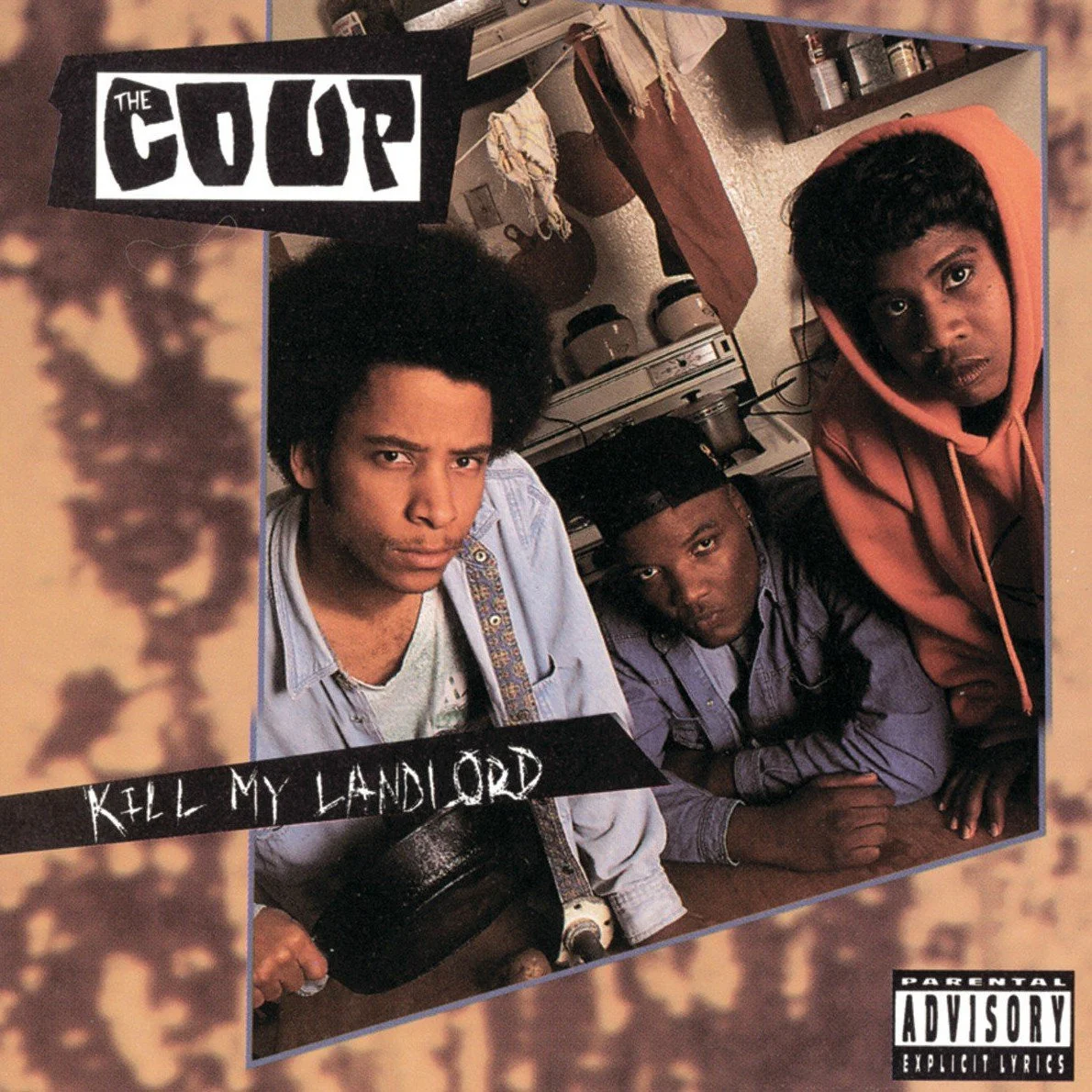
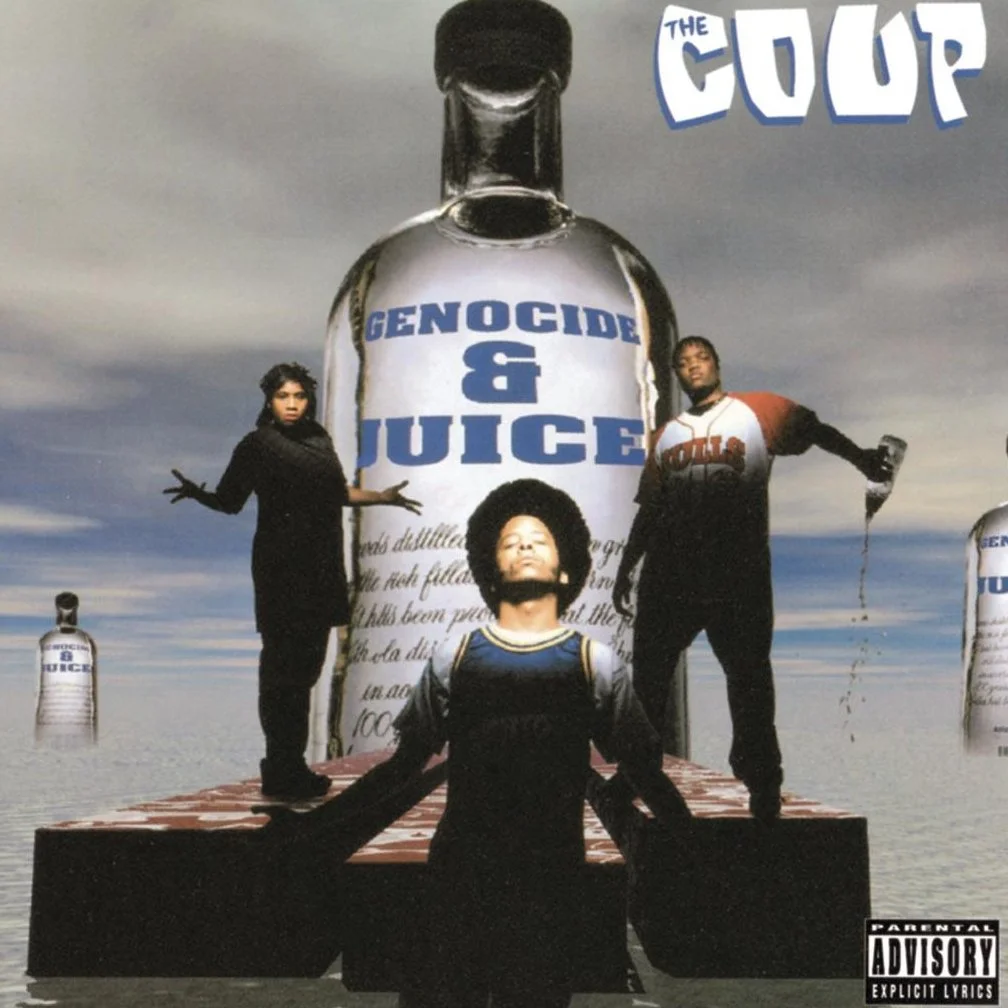
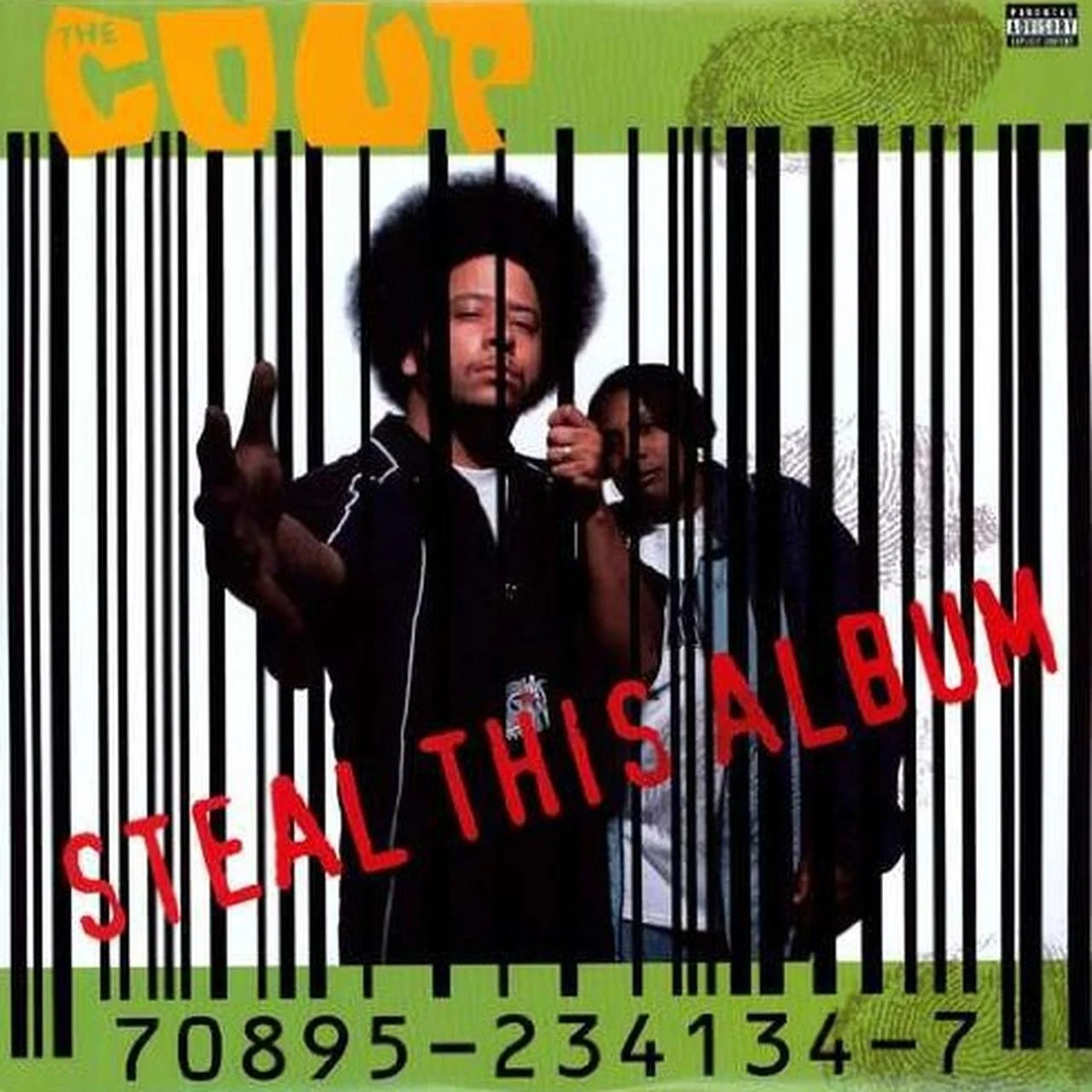
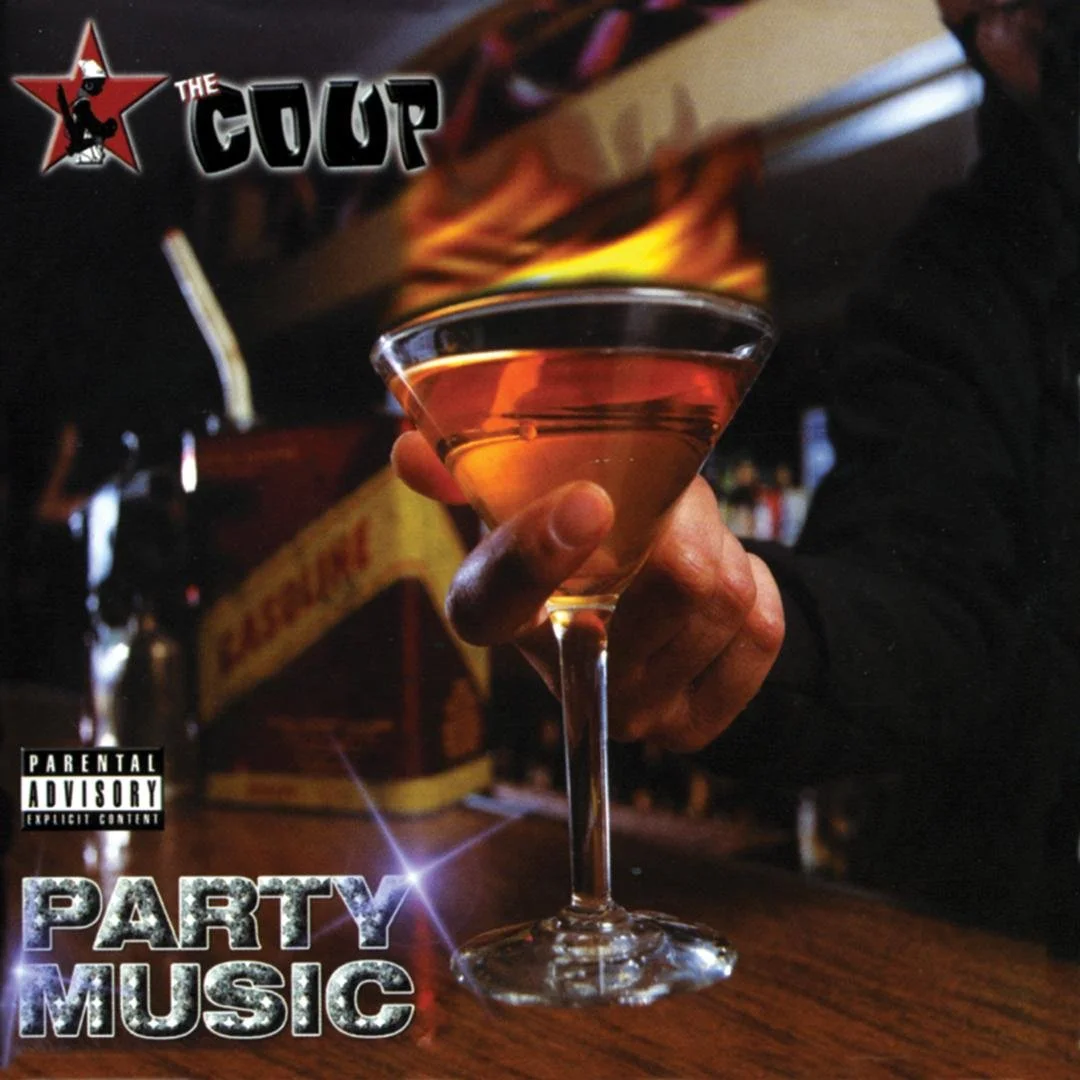
Riley finds poignancy and humor in “I Love Boosters!”, his dedication to organized crews (often made up of women) dedicated to jacking merchandise from over-priced retail stores throughout the Bay Area. He explains how their efforts to sell the boosted merchandise at severely discounted rates to ’hood residents make them legitimate heroes. “If it wasn't for the hard work of a booster,” he explains. “Most couldn't go to the clubs that we're used to.” Riley later used this song as the central inspiration for his second feature film of the same name, starring Keke Palmer, Naomi Ackie, Demi Moore, and Lakeith Stansfield.
As mentioned earlier, the album’s other theme is the vocal opposition to the war in Iraq. In spring 2006, Sadaam Hussien was in US Custody but had yet to be tried and executed. Still, hostilities continued to rage in the region for a third year, and would continue to drag on. Riley is vocal about his displeasure with the war, targeting President Goerge W. Bush specifically. “Head (Of State)” delves into the shared history between Hussein, the Bush family, the CIA, and the oil industry. He gives a crash course on the conflicts within this region of the Middle East, which I really wish wasn’t so fucking relevant today.
“Captain Sterling’s Little Problem” is a throwback anti-war song, and with a few minor modifications, could reflect just about any modern war that the U.S. has been involved in. Riley assumes the role of a soldier on the frontlines, disillusioned by the pointlessness of the conflict (“All that fight for freedom shit; we know that shit is phony”). He shares with zeal his plans to kill the commanding officer for sacrificing their lives for the benefits of corporate interests. The track features a blistering performance by Tom Morello on guitar. A few years later, Riley and Morello would collaborate and release Street Sweeper Social Club (2009).
“Babylet’shaveababybeforebushdosomethingcrazy” is a more personal take on the sense of doom brought about by protracted global conflict. Singer/rapper Erica “Silk-E” Reynolds takes the lead vocal for the song, which was written by Riley and the late D’Wayne Wiggins of Tony! Toni! Toné!. She conveys the painful yearning to do something positive in a world seemingly thrown into chaos. Again, I really wish this song wasn’t so fucking relevant today.
The Coup usually end their albums with boisterous, bombastic closing tracks, but Riley and company decide to go the more musically mellow route on Pick A Bigger Weapon with “The Stand.” It’s the sole track on the album not produced by Riley, with Organized Elements taking the production reigns. They create a lush and jazzy musical backdrop, fueled by Wurlitzers and pianos and a full horn section.
The pensive musical approach contrasts well with the frustration Riley expresses, as he speaks from the perspective of someone at the end of their rope, “bleeding broke,” struggling to find ways to provide for their family working within a system that seems rigged for them to fail. Pushed to the point where he can’t compromise again, he declares, “So here's my anthem sing it to the music or shout / I forfeit the rat race to start the twelve-round bout.”
In the two decades since the release of Pick A Bigger Weapon things have not improved for the working class. The wealthy have gotten wealthier and corruption is more rampant than ever, as corporations operate under the assumption that their workers are completely disposable. It doesn’t help that our current government is as brazenly corrupt as any in this nation’s history, eagerly facilitating the construction of an oligarchy within the United States. The Coup’s music and message is as resonant as ever, serving as stark reminder that change can be possible, but you have to get into the game and show yo ass when necessary.
Listen:
