
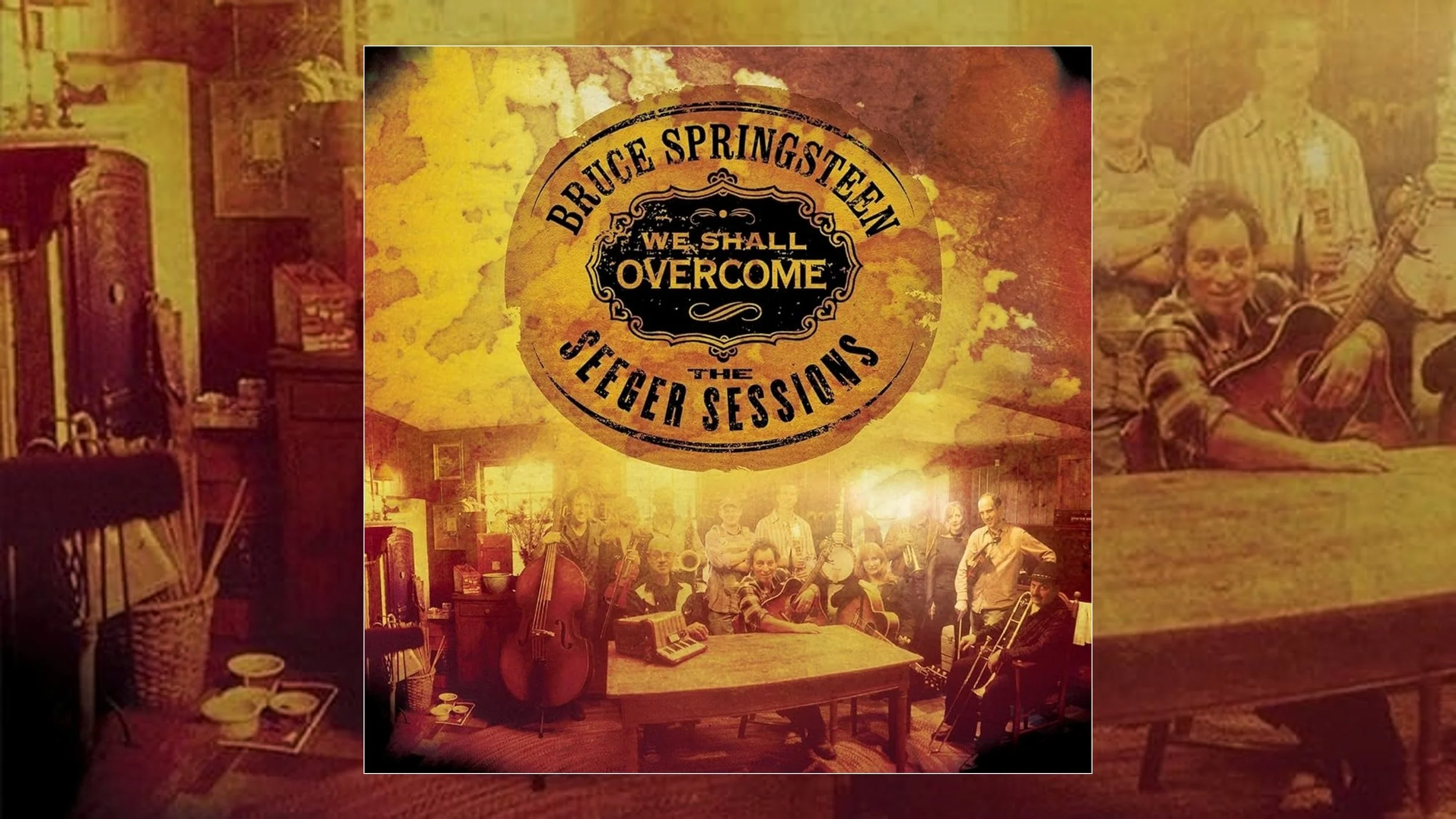
Happy 20th Anniversary to Bruce Springsteen’s fourteenth studio album We Shall Overcome: The Seeger Sessions, originally released April 25, 2006.
A few weeks ago, Bruce Springsteen released “Streets of Minneapolis,” a song protesting Immigration and Customs Enforcement’s occupation of Minneapolis, Minnesota in general and the killing of Alex Pretti and Renee Good in particular. The song galvanized support across the country and worldwide while reaching #1 on the Billboard downloads chart.
Thematically, the song tracks with what Springsteen has been up to in the 21st century: chronicling the degradation of working people by those with enormous power. We saw it on 2007’s Magic (“Long Walk Home,” “Devil’s Arcade”), 2012’s Wrecking Ball (“Shackled and Drawn,” “Death to My Hometown,”), and 2020’s Letter to You (“Rainmaker”). While Springsteen had touched on these themes before (on “The River,” “Factory,” “Reason to Believe,” and other tunes from his early years), most of those songs are focused primarily on storytelling. The politics are in the background.
Two things changed in the 2000s: First, Amadou Diallo was killed by the NYPD, motivating Springsteen to write the haunting “41 Shots,” a song about police violence that he would resurrect periodically, including after the killings of Trayvon Martin, George Floyd, and Breonna Taylor. “41 Shots” put Springsteen on a political track, but very few of his political songs sound anything like it. This is because of the second thing that happened: The Seeger Sessions.
The Seeger Sessions taught Springsteen to find the joy in populism and its music. He brought his decades of experience leading the most exuberant band in rock and roll to the folk music canon, producing a raucous, shaggy record that foregoes much of the stately drama of Springsteen’s more serious moments. Every song makes you want to do two things: swing your partner ‘round and ‘round, and scream at your boss.
As an American who tends to bristle at empty displays of patriotism, it’s one of the few works of art that makes me proud to live in this country. It never once tells me to feel that pride (as lesser songwriters would try to force); it just shows me the history of communities drawn together by these songs and invites me to be part of them.
Listen to the Album:
It helps that the performances of various New Jersey musicians—dubbed the Sessions Band—are masterful. While some individual instrumental moments stand out (in particular Soozie Tyrell and Sam Bardfeld’s violin intro to “O Mary Don’t You Weep”), the heart of the record is in the group’s collective sound. The album opens with Springsteen singing the first verse of “Old Dan Tucker” over just banjo and light percussion—but when the chorus hits, the rest of the band sings an emphatic “Get out the way!” as the rest of the instruments fall in. The first song immediately establishes this album as a communal endeavor.
The collective joy of the album is both vocal and instrumental. Instrumentally, the Sessions Band creates a wall of sound behind Springsteen on tracks like “John Henry” and “American Land” (a bonus track), mirroring the rock-and-roll brouhaha of live E Street Band recordings. But it’s the vocals that set this record apart, with the band embodying the group singing tradition of folk music. “Jacob’s Ladder” and “Jesse James” both feature loose backing vocals that sound like what you’d hear at a particularly musical house party.
That’s because, well, the record is basically a musical house party. It was recorded over three days—one in 1997, one in 2005, and one in 2006—mostly in one room. Springsteen called out arrangements on the fly, and the musicians followed along. This is the way this music is typically played and thereby best enjoyed.
This is not how Springsteen usually operates; he is best known as a songwriter and a craftsman. Dozens of songs got cut from Darkness on the Edge of Town (1978). He carves away at the marble slab of his music until his vision is realized. This vision is his alone: as he wrote in his memoir Born to Run (1975), he didn’t want to be in a band. He wanted to have a band.
As a result, The Seeger Sessions is often thought of as an outlier in Springsteen’s discography. He didn’t write any of these folk songs popularized by Pete Seeger (save “American Land”) and it is the opposite of his more tightly controlled endeavors. Disappearing into the stories is the point; it’s not about him; it’s about the music.
Despite these differences, everything about the Bruce Springsteen experience—the joy of creating music with others, the connection back across generations to those who have done it before us, an optimism around what people can do if they believe in themselves and each other, a righteous vindication of the dignity of all—comes alive on this album. Springsteen’s recent treatment of politics as an endeavor that shines a light on what is possible, rather than despair at what has been lost, can be traced back to these three nights in his living room.
Watch the Official Videos:
Five days after the record came out, the Sessions Band made their debut at New Orleans Jazz Fest. Hurricane Katrina had ravaged the city eight months earlier, and the Bush administration’s response had been calamitous. These people were hurting. As the band started up, Springsteen launched into “O Mary Don’t You Weep” with an anger and spirit that matches that of his opening monologue in Minneapolis from a few weeks ago. As he asked the people of New Orleans to have faith and keep looking after one another, he channeled a songwriting tradition that started long before him, that he would continue in Minnesota two decades later, and that will outlast him, and you, and me. The Seeger Sessions is a reminder of our place in that tradition, and when we feel alone and scared, it is a reminder of how good it can feel to sing a song with others.
Listen:
