
I didn’t really start collecting vinyl until I was in college. I began attending the University of Pennsylvania in the Fall of 1993, and during my freshman year I began to frequent a trio of independent record shops in Downtown Philadelphia. I bought a smattering of 12-inches that first year (my dorm room was too small to store more than a few records), but I really threw myself into it that following summer and continued onwards.
Since it was the mid-1990s, the beginnings of my vinyl habit coincided with the beginnings of the golden era of East Coast-based independent hip-hop. Hence, during much of my college years I spent a healthy amount of coin on independent 12-inches, either spinning them on my shitty Gemini turntable in my dorm room or during my Friday night radio show at Penn’s student-run station that I’m pretty sure no one listened to.
A lot of the 12-inches I bought during those years are still sitting on the IKEA-purchased storage shelves housed in my over-crowded man-cave/record room. I treasure all of them, from the timeless classics to the dated curios.
Back in the 1990s, artists could link up with an independent label (or create their own) that could scrape together enough money to press up a few thousand 12-inches to distribute to Mom-and-Pop record shops or provide to college radio stations around the country and occasionally overseas. But paying for the studio time to lay down an album and then press up CDs/vinyl/tapes was often a bridge waaay too far. Hence, I never heard more than a handful of songs from some of my favorite crews from that era. My kingdom for a mid-1990s full-length by Ten Thieves.
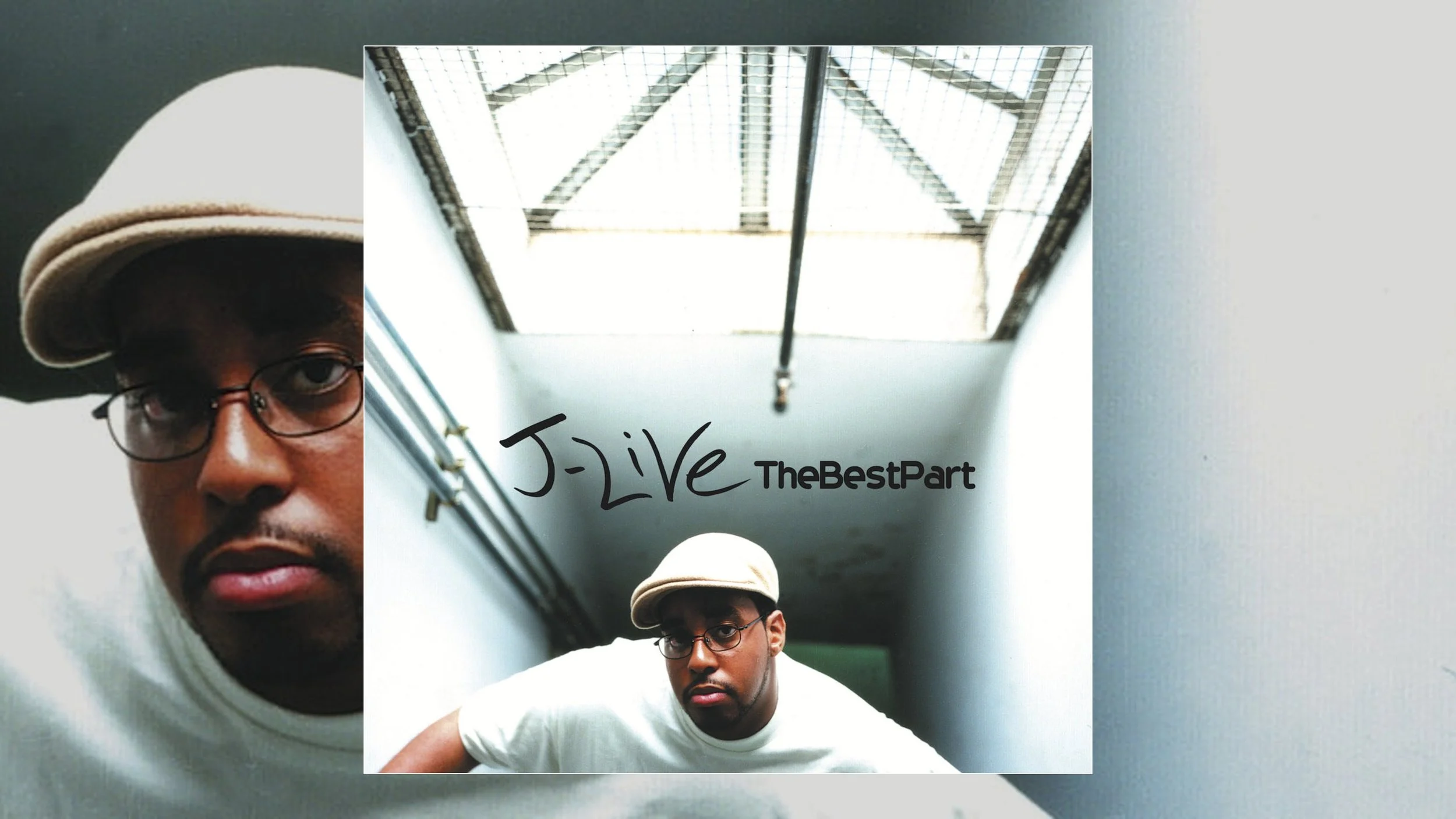
Fortunately, in some cases, I got my wish. Even if it was a few years after the fact. Such was the case with Jean-Jacques “J-Live” Cadet. He put his best foot forward with his early independent 12-inches, and eventually followed through with The Best Part, released 25 years ago.
J-Live stood out in a crowded field during both the mid-1990s and the early 2000s. He had gone from being an intern at the independent Raw Shack Records to being one their flagship artists, dropping two of the best 12-inches of the era. The first was “Longevity” and its B-side “Braggin’ Writes.” The latter song is one of the most renowned songs in his catalogue, a dual performance by Live as he spins a breakbeat on two turntables while simultaneously rapping. A few years later, he dropped a 12-inch/maxi-single of sorts featuring the songs “Can I Get It?,” “Hush The Crowd,” and the excellent DJ Spinna remix of “Braggin’ Writes.”
Those first two 12-inches showcased J-Live’s vast talents. He could deliver straightforward raps and flex more complicated rhyme styles and deliveries. He was a gifted storyteller. He had a good mind for conceptual material. And he had an exceptional ear for beats. From his first single it was apparent that he took emceeing seriously and strove to build a career as an emcee.
Listen to the Album:
Due to the issues with the label, Live left Raw Shack in favor of Payday Records, and began to record his solo debut. However, he faced difficulty getting The Best Part to his audience. He left Payday soon after the imprint was absorbed by Warner Bros. in a buy-out. He then migrated to Universal, recorded a few more songs, and ostensibly finished the project in 1999. However, he was still not able to release the project commercially. A high-quality double-vinyl bootleg of the project turned up in some stores as Live tried to figure out his next move.
J-Live eventually released The Best Part independently, through his Triple Threat Imprint, which was distributed through the 7 Heads label. Even though much of the material had been sitting in the proverbial can for a few years, none of it sounded dated, either sonically or lyrically. With the help of exceptional production, J-Live put together what would be one of the best albums of the 2000s.
The Best coalesces around the overall theme of what it takes to be a great emcee. The project was recorded during an era when if a rapper sought success, image often superseded skills during “this corporate age of unreasonable facsimiles.” During this period, J-Live envisioned himself as a throwback to a time when rhyming skills were paramount and constructed a debut to demonstrate the vast array of his skill.
Like many NYC-based rappers of the era, J-Live is especially adept at recording braggadocio-based emcee shit. He delivers this style of hip-hop early and often throughout The Best Part, beginning with the rugged “Got What It Takes.” “Yes!” contrasts a smooth track by Emall Alaquiva with an increasingly hyped delivery, while the DJ Spinna produced “True School Anthem” is an energetic dedication to lyricism. On the latter track, J-Live envisions himself as the link between old school hip-hop related values and new school stylistic sensibilities.
“Don’t Play” is a clear early highlight, as J flows to a track built by a then up-and-coming 88 Keys, who samples a chunk of Brazilian jazz. J-Live stresses his commitment to creating art with an impact, rapping, “If you around light, sweetheart, you can reflect / Don’t put it down ’cause you need art you can respect / I know it sound not quite like what you expect / Type underground, meaning not just after the check.”
J-Live champions causes beyond artistic integrity on The Best Part. He traverses the ruins of the United States’ on “Vampire Hunter J,” a song inspired by the Japanese Vampire Hunter D novel series and anime. Instead of literal blood suckers, J-Live commits himself to hunting those who exploit the population, feeding off their lives by promoting negativity. “Oppressed people got power, but demons conceal it,” he raps, “to steal it and wield it, print money to shield it.”
J-Live continues to channel his righteous anger on the appropriately titled “R.A.G.E.” (a.k.a. “The Rule of Allah is God’s Equality). Here he rails against the United States power structure, who continues to exploit the nation’s population, mentally training them to accept their fate from a young age. He rallies people to action, rapping, “Bust this: he need to point the same gun at the criminally insane justice / System that dissed him and kissed him goodbye / From the start, ’cause his world view was based on a lie.”
J-Live executes some ambitious tracks with dizzying ease. This includes “Them That’s Not,” which was to be the album’s first single when it was going to be released through Payday/London. Over a track produced by Grap Luva, J-Live regales listeners with the tale of the rapid rise and even more precipitous fall of fictional rapper Castro (“who had little problem with his cash flow”). Tired of living hand to mouth, he sells his soul for quick success. Armed with a ghost-written song promoting bullshit, he secures a record deal, only for his audience to tire of him before his album is even released. Grap Luva’s beat assists J-Live’s storytelling, starting slow and rapidly accelerating as Castro finds success, then slowing back down to a crawl as his career grinds to a halt.
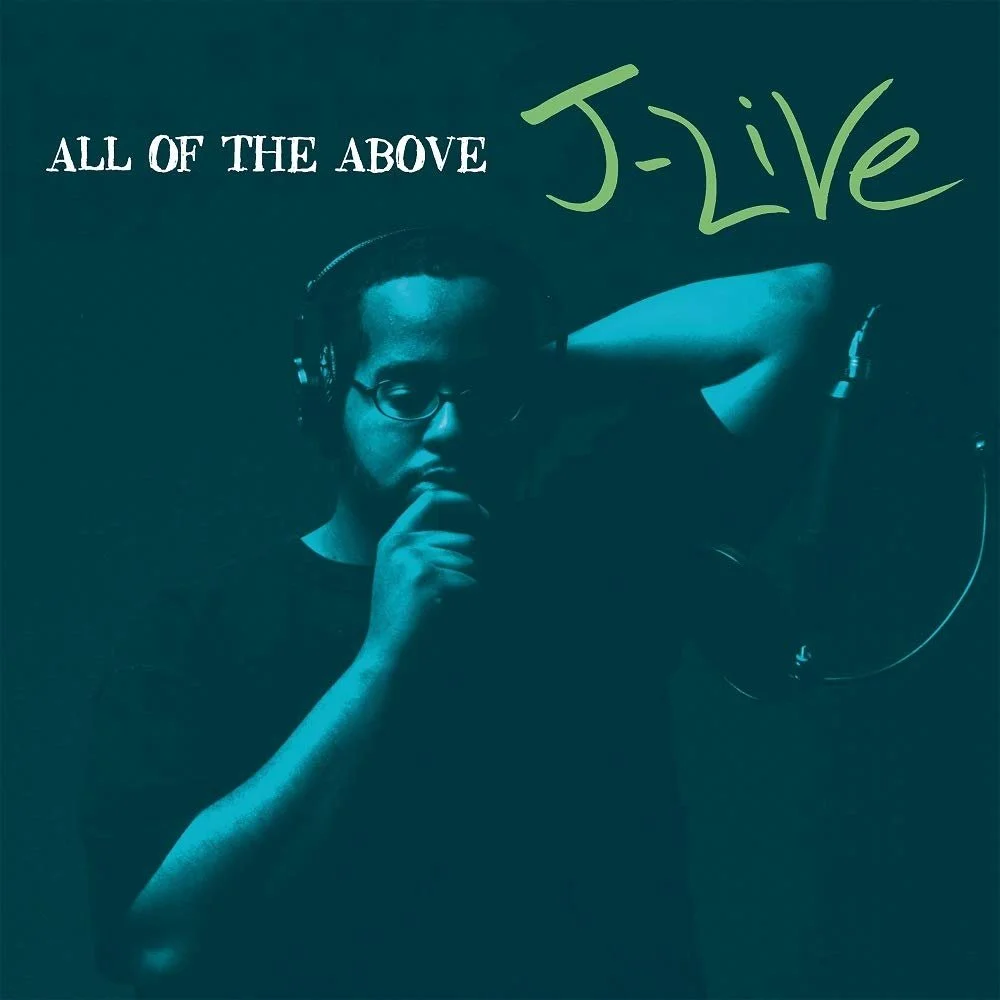
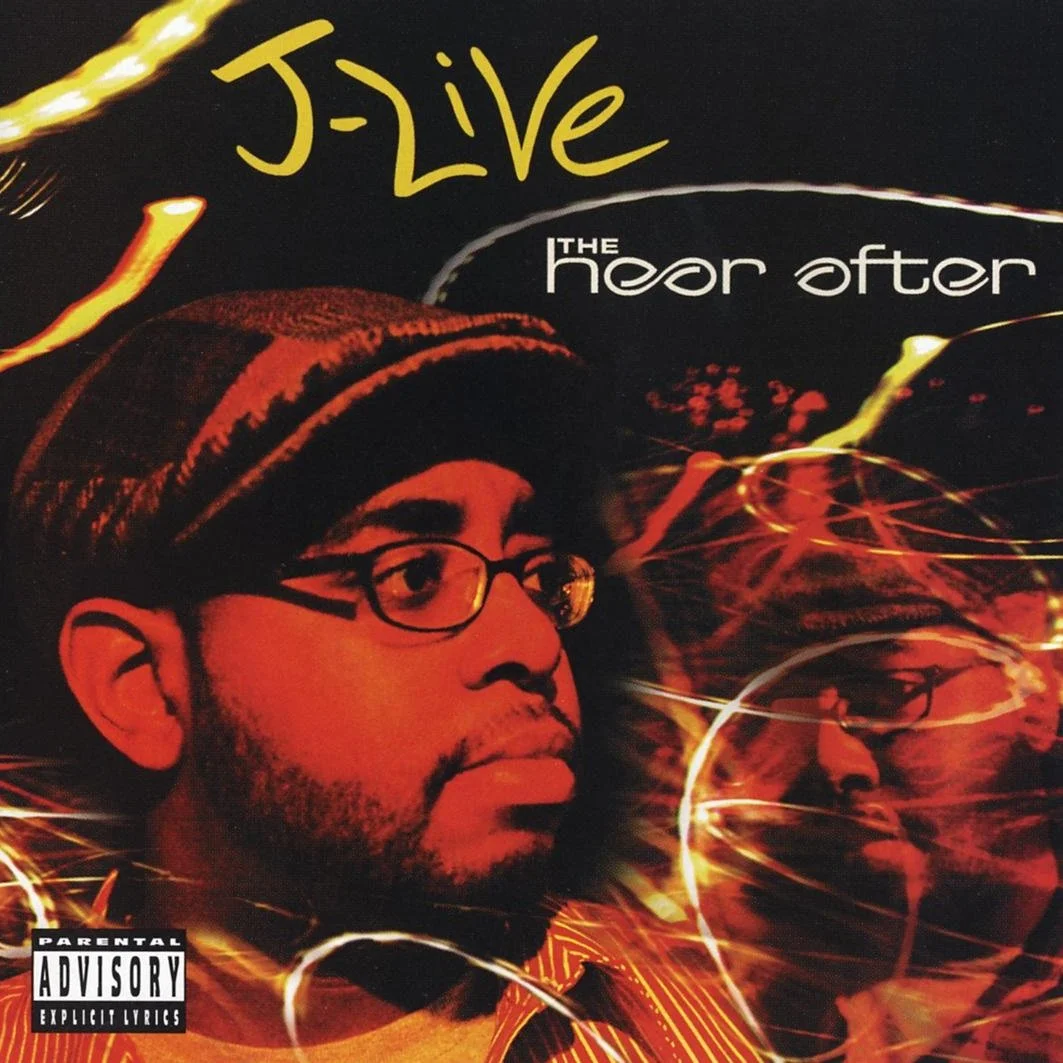
Enjoying this article? Click/tap on the album covers to explore more about J-Live:
The Prince Paul produced “Wax Paper” is another high-concept banger. Any description by me wouldn’t really do it justice, but in brief, J-Live describes the early dual development of DJing and emceeing via recounting the exploits of twin hitmen. The song was J’s second collaboration with Prince Paul, after recording “The Truth” for the Handsome Boy Modelling School debut So…How’s Your Girl? (1999).
J-Live, joined by emcees Asheru and Probe.dms do a solid spin on “hip-hop as a woman” with “Kick It To the Beat.” All three emcees kick their flyest game to the produced beat itself, as J raps, “No disrespect, but you got a whole lot of bottom / And I’m curious as to how we sound in the mix / See, I ain’t looking for no one-hit-wonder / But I think you ought to know what I do for kicks.” Pete Rock’s production is worthy of attention, as he expertly chops and flips a vibraphone sample, mixing it with guitars from a classic breakbeat.
J-Live focuses on different types of interpersonal dynamics on “Get the Third,” produced by the aforementioned Probe.dms and Chris Catalyst. He breaks down three different types of relationship dynamics, exploring those that appeal to his mind, those that appeal to his carnal appetites, and those that make him throw up the middle finger. He channels bitterness during the third verse especially well, seemingly seething as he raps, “Now my vision's clarified like Windex / You get the peace sign without the index – from ex to next / Too complex? I’ll translate: Fuck you / Clean bill of health still I wish I’d never stuck you.”
Overall, J-Live frequently emphasizes the importance of preserving hip-hop culture throughout The Best Part. “Timeless” centers on the importance of creating music that will endure, rather than focusing on competing with your peers. Probe.dms and Chris Catalyst hook-up the mellowest track on the album, as J drops extended metaphors to muted horns and keys. “My rhymes are buried too deep to measure by the sands of the hourglass,” he raps. “In other words: built to last.”
Oddly, The Best Part seemingly has trouble settling on an ending; any of the album’s last five to six tracks could have adequately served as the album’s final track. Ideally, I’d say the best potential ending point would have been either the album’s title track or “Epilogue.” J-Live rhymes with passion on the DJ Premier produced “The Best Part,” which is one of the beat-making legend’s best creations of the 21st century, combining samples of early 1980s R&B with a jug band. J outlines how he has built his career to this point, noting his meticulous efforts to master all aspects of emceeing.
The album-ending “Epilogue” is The Best Part’s epic closing argument. J-Live produced the track himself, hooking up a melancholy acoustic guitar sample. Over three lengthy verses, he outlines his overall ethos, including his views on what it really means to be a dope emcee in the early 2000s. He ponders the delicate balance required to make uncompromised music with desire for your record to be heard by those seeking great hip-hop.
The Best Part became the first entry in what’s becoming a remarkably dope career. In the subsequent two-and-a-half decades, J-Live has built an impressive discography, continuing to release superior material through the ’00s, ’10s, and the ’20s. He continues to release his music independently, putting out new projects at a regular clip, while maintaining his artistic integrity.
It's been impressive to watch an emcee like J-Live begin their career with a single indie 12-inch, and through hard work and commitment to his craft, build one of the better discographies of the past 25 years. Being a great emcee takes practice and perseverance, and J-Live started down the right path early with The Best Part.
Listen: