
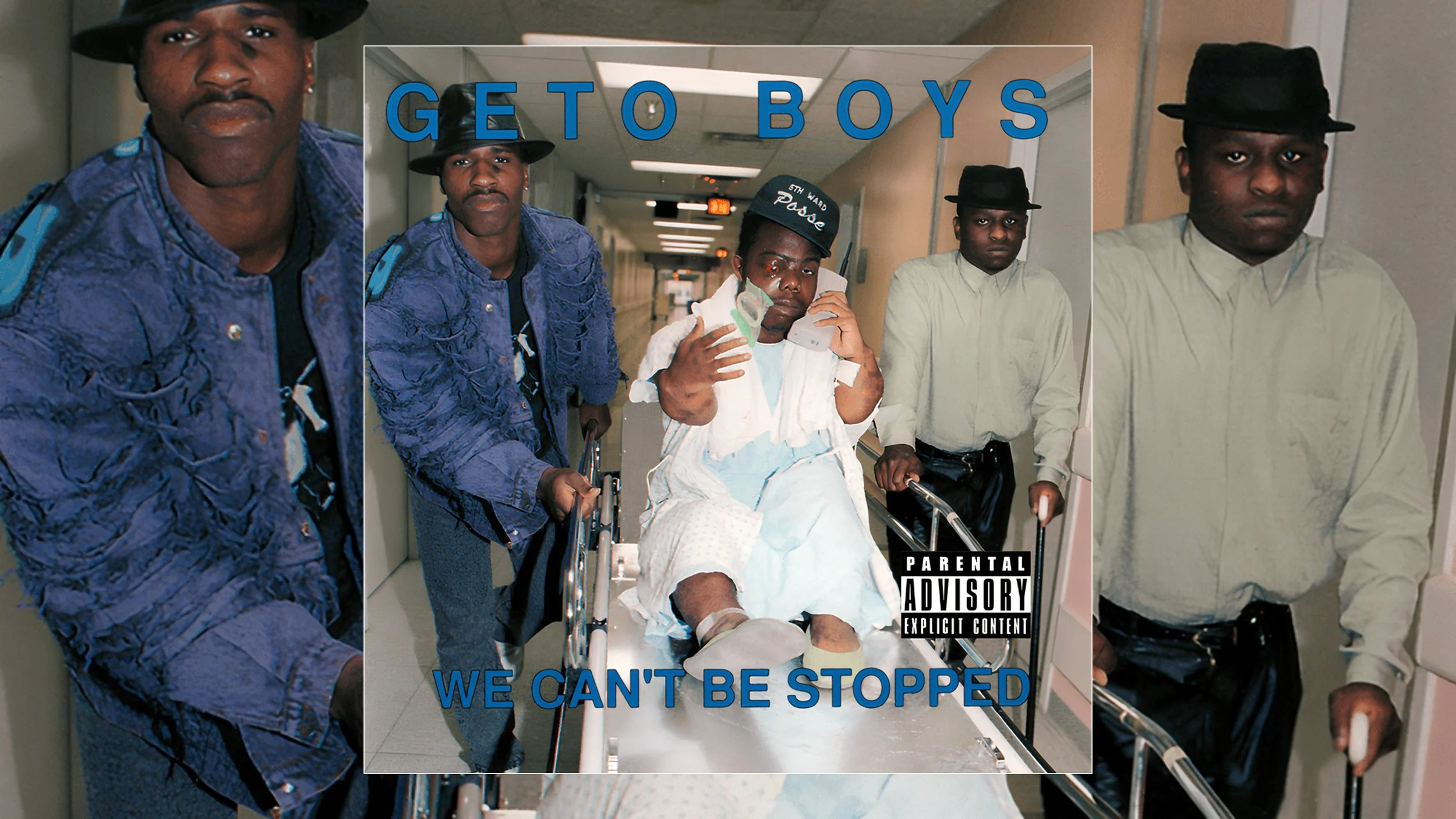
Happy 35th Anniversary to the Geto Boys’ third studio album We Can’t Be Stopped, originally released July 9, 1991.
“You know in 1989, we knocked on the door. In 1990, we beat on the door. Now it’s 1991, we finna kick this mothafucker in.”
So begins the title track to We Can’t Be Stopped, the third studio album and fourth album overall by the Geto Boys, released 35 years ago. The Houston-based group had been slowly making noise and building an audience since the 1980s, and with the release of this project, they knocked the proverbial door right off its hinges and forced their way into the big time.
We Can’t Be Stopped was certified platinum, mostly based off of the success of its first single “Mind Playing Tricks On Me,” which was a massive, genre-crossing hit. And the fact that the Geto Boys recorded a massive, genre-crossing hit is fairly jaw-dropping if you know anything at all about the group, especially its pre-We Can’t Be Stopped history.
The Geto Boys were initially the brainchild of James “Lil’ J” Smith, a notorious and visionary figure in the Texas hip-hop scene and co-founder of the Rap-A-Lot record label. The group released its debut album Making Trouble (1988), and went through numerous lineup iterations, before settling on the “classic” lineup. It’s best known configuration (and the version that recorded We Can’t Be Stopped) consisted of William “Willie D” Dennis, Brad “Scarface” Jordan, and Richard “Bushwick Bill” Shaw. This version of the group has always been special in that each of the individual emcees are one of the most distinctly unique characters to ever pick up a mic. All three are singular, enduring talents. Yet even with their individual strengths, they still mesh together effortlessly when recording together.
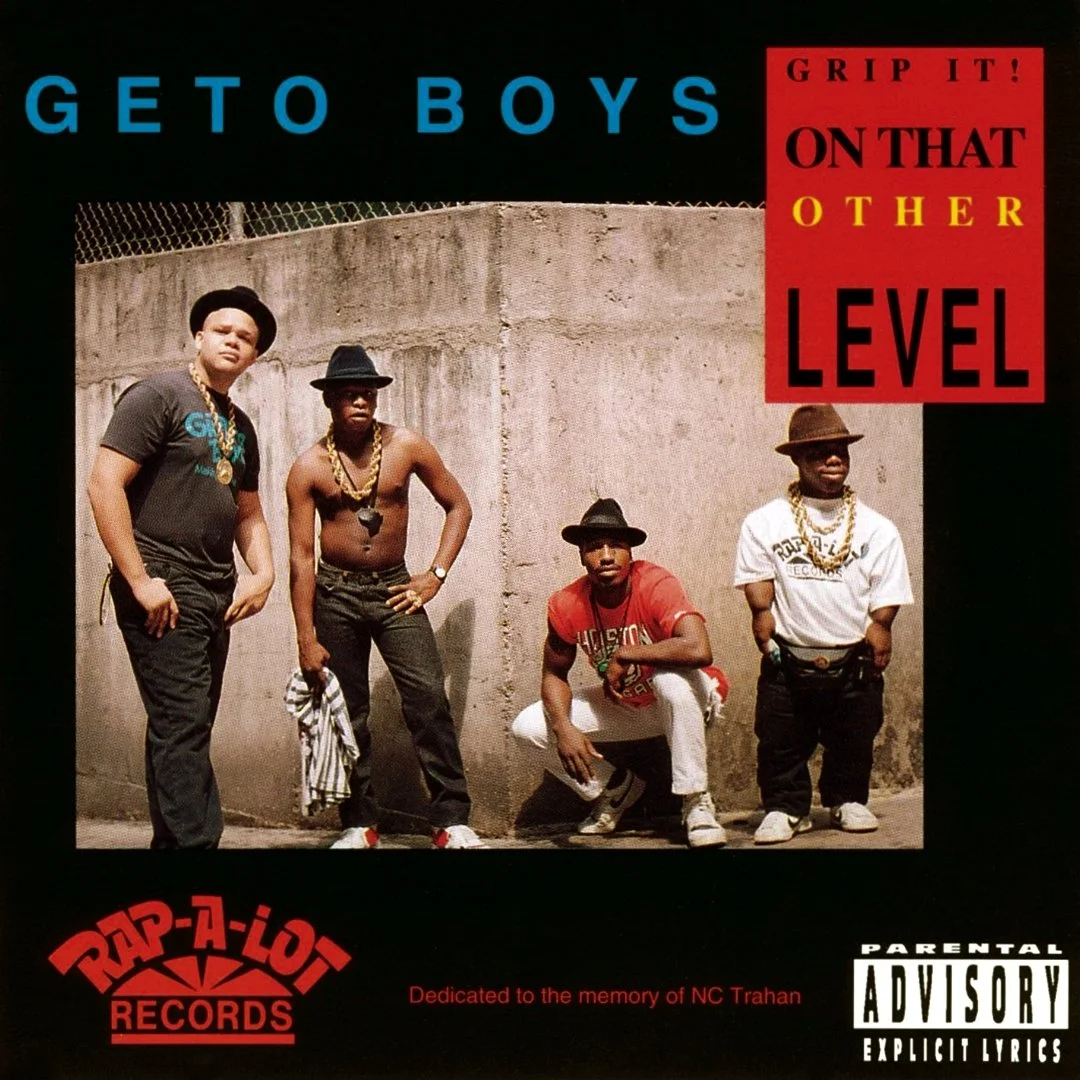
We Can’t Be Stopped was actually the Geto Boys’ second attempt at kicking the door in. The first came less than a year earlier, when Def American Records released The Geto Boys (1990). Legendary producer Rick Rubin took an interest in the group, deciding to re-work/re-release a version of their second studio album Grip It! On That Other Level (1989), which Rap-A-Lot had initially released. It featured most of the same songs, with a few added and a couple dropped, while the order of the tracks was re-sequenced. The group re-recorded a lot of their vocals and Rubin, with the help of Brendan O’Brien, slightly remixed many of the songs.
This album was my first exposure to the Geto Boys, after dubbing a copy of the tape from a friend in high school. It was certainly unlike anything I’d heard before, with its depictions/descriptions of extreme violence and sex. And everyone in the crew gave off an aura of danger, like they really were the baddest MFs on the planet.
Unfortunately, things went sour for the group and Def American before the album even dropped. Geffen, which distributed the imprint, refused to put the project out, citing the “offensive” content. The manufacturer refused to press up copies of the album. When the album was released, it featured a disclaimer on the cover, where the manufacturer essentially disavowed the project. Eventually Geffen terminated its distribution deal with Def American, and Rubin worked out a deal with Warner Bros.
The Geto Boys took things back to their place of origin with We Can’t Be Stopped and adopted a more “back to basics” approach, reportedly recording the album over the period of two weeks. But despite the recording window being streamlined, the material still feels fleshed out. The trio of Scarface, Willie D, and Bushwick Bill certainly did not eschew their penchant for recording extreme content, but they show a good amount of depth, complexity, and an almost surprising amount of humor throughout the project. Overall, it’s arguably the best album in the Geto Boys’ entire catalogue.
Listen to the Album:
We Can’t Be Stopped is a different type of Geto Boys album than had been released before in that much of it focuses on the group’s individual talents. There are only three songs where the group appears together, while each of the emcees get three separate solo tracks. Though each had previously established they could carry a song on their own (Willie D had already released his solo album, 1989’s Controversy, at this point), it seemed to be setting up the next step in each of their three careers. According to Scarface in his Diary of a Madman memoir, members of the group would record material on their own, and then bring the finished product to Lil’ J; some of these solo recordings would ultimately make it to their albums.
We Can’t Be Stopped wouldn’t be a Geto Boys album if there wasn’t a lineup change. In this case, Collins “Ready Red” Leysath (R.I.P.), the group’s DJ and primary producer, left the fold. The reasons for his departure have never been clear; he “found” religion or got married or maybe didn’t like how the money was being split. Members of the group told Brian Coleman in Check the Technique that Red still contributed to the album, but the extent to which he did isn’t really clear. The album’s credits are vague, as seven people receive production credits; three of them are the group’s emcees, one is Lil’ J, and Ready Red is left off entirely.
The album’s production is one of its strong points. It features a mix of sampled material and live instrumentation. Though there’s certainly a few high energy tracks, the group smooths things out musically on occasion, even if the subject matter is not modulated.
Though the album was recorded during a time when “sides” were still a thing, it pretty much splits evenly into thirds. Each third starts with a group song, followed by a solo track from each individual member. The structure serves the album well, as the group tackles the “big” issues as a unit, and then allows the personalities to do the talking on the solo tracks.
The crew start things off with the title track, the Geto Boys’ re-statement of purpose. The song is a spiritual sequel of sorts to “Do It Like a G.O.” (from Grip It! and Geto Boys), with the trio defiant in the face of the previous year’s adversity. The three emcees pass the mic back and forth, listing their grievances with industry politics, and outlining their philosophic approach to music. “None of that ‘Me! Me!’ rapping,” Willie D proclaims. “We let your motherfucking ass know what's happening.” They also target impending governmental censorship, with Scarface warning, “Keep lettin' the government dictate what you hear / Next they'll put stickers on your ears.” And, of course, Bill delivers a perfect response by swearing, “Even with that move we got ’em in anguish! / ’Cause we'll learn sign language!”
“I Ain’t With Bein’ Broke,” the group’s second single, is a dedication to the pursuit of money. Willie D apparently penned all three of the song’s verses and eventually channels the frustration that goes along with making sure that one doesn’t live in poverty, and the desperation that causes people to break the law in order to make sure that they have the money to survive.
We Can’t Be Stopped is of course known for its first single, “Mind Playing Tricks On Me.” It’s the best known song in the Geto Boys catalogue and honestly one of the best hip-hop singles of all time. Again, given their history and image, the Geto Boys joined Cypress Hill as about the least likely hip-hop crew that I’d imagine to release a chart-topping, genre-crossing song in 1991. But its success was undeniable, as Willie said in Check the Technique, “Take that track off the album and it’s just a cult classic instead of Platinum.”
The song itself, from subject matter to structure, also doesn’t make it sound like a surefire pop hit. It’s a four-verse, five-minute-plus exploration of the psychological toll of being a gangster, and the first of its kind at that. It delves into the effects of guilt, paranoia, regret, fear and loss better than most songs that have attempted to address these sentiments ever have. Furthermore, there’s no hook to speak of, as the group lets the sample of Isaac Hayes’ “Hung Up On My Baby” just ride.
The song had its origins as a Scarface solo track (which is why he has multiple verses on it). In Diary of a Madman, Face wrote that no one initially thought the song really worked that well, until Priority Records (who was distributing Rap-A-Lot at the time) heard it and became convinced it was going to be a massive hit. Afterwards, Willie D wrote and contributed his own verse to the song, while Bill delivers the Scarface-penned final verse. This verse, which shows the brutal effects of psychosis, is the reason the song is frequently and incorrectly referred to as a Halloween-themed track (remember, “It wasn’t even close to Halloween.”)
Personally, my favorite parts of “Mind Playing Tricks On Me” is the minutiae, as it features two of the best delivered lines in hip-hop history. First is Willie D’s pronunciation of “swa-ord.” And the next is Bill’s “Aw man, homie…” on the clean version of the track.
Even though “Mind Playing Tricks On Me” didn’t become the solo exhibition Scarface originally envisioned, he does a great job on his other solo entries, laying the groundwork for his soon-to-be solo career. “Another N****r In the Morgue” and “Gotta Let My Nuts Hang” are a pair of epic undertakings, where Scarface lays down his gangsta bona fides and his ability to create mini crime-driven narratives.
The former is the most sonically sparse track on the album, with Face rocking to live instrumentation, particularly a plucky guitar line. The latter is also a superior recording, with Scarface throttling corrupt police officers and crafting tales of executing various capers. The two songs reflected the type of material that Face would include on his then-forthcoming solo debut Mr. Scarface Is Back (1991), released a few months later.
In comparison, “Quickie” feels pretty slight, though reasonably entertaining. Scarface describes his efforts to seek some wham-bam-thank-you-ma’am sexual congress with one of his female partners, only to decide resignedly to pleasure her all night long in the back of his car. I’m always a fan of a sample of The Delegations “Oh Honey,” but it’s the most generic song on the album in that it really could have been recorded by any “gangsta” artist releasing music at the time.
Though Scarface has earned a ton of well-deserved acclaim over his career, I’ve always considered Willie D to be the crew’s most underappreciated weapon. He had tons of charisma and panache, and while he rhymes with a perpetual sneer, he’s charmingly irascible. He has always conveyed a great sense of humor through his lyrics, as all three of his solo tracks are legit hysterical.
He checks various line-steppers on “Homey Don’t Play That,” warning people against getting too familiar, taking jokes too far, or coveting his girl over a mix of various P-Funk samples. “I Ain’t A Gentleman” is an absolutely hilarious answer record to Queen Latifah’s “Ladies First,” where he lambasts the social niceties that are a part of male/female interactions. “I’m not your motherfucking dog,” he thunders. “You won't see me running to ya at your every beck and call / Bitches act like they handicapped / Want me to open doors, pull out chairs and all that.” Furthermore, him telling prospective mates that his idea of a good fight is a cock fight is also amazingly funny.
Willie D levies a lot of his righteous ire towards the Recording Academy and the GRAMMYs on the album-ending “Trophy.” By the time We Can’t Be Stopped was released, they were awarding GRAMMYs to hip-hop artists, but the respect from the Academy towards the genre seemed begrudging at best. Willie blasts the academy and the award show itself for being overtly white, racist, stodgy, and out of touch (still valid criticisms three-and-a-half decades later), as well as their fixation on the same artists every year (still accurate), and their continual rewarding of shallow musical content (yep, still true). During the song’s closing screed, he awards his own GRAMMYs to the Geto Boys (“Most fuck words in a song”) and peers like Ice Cube (“Bitch killer of the year”), 2 Live Crew (“Nasty Ass Group award”), Ice-T (“High Roller of the Industry”), and Public Enemy (“Pro-Black GRAMMY”).
Overall, Bushwick Bill’s collection of solo tracks are the least appealing to me, but they certainly reflect his rapping personality. He starts things off with “Chuckie,” where he envisions himself as the murderously possessed doll of the same name from the Child’s Play franchise. The Geto Boys were pioneers, and arguably the progenitors, of Horrorcore hip-hop, and Bushwick, who was an avowed horror movie fan, absolutely committed to the premise.
According to Check the Technique, he wrote the track with the help of fellow Rap-A-Lot artist (and fellow horrorcore pioneer) Gangsta N-I-P. The pair craft three gruesome verses, which are effective at conveying a sense of desperation and dispossession. I will say the production definitely evokes the right mood, pairing percussion with warped keyboards, organs, atmospheric sounds, and vocal samples from the Child’s Play film.
As much as Slasher-rap isn’t my bag, the least enjoyable song on We Can’t Be Stopped manages to be “The Other Level.” It’s a skeevy premise, as Bill, after deciding “fucking two of the finest bitches” lacks the excitement it once held, decides to manipulate the two into having sex with each other. Even though the track features a smooth replaying of Diana Ross’ “Love Hangover,” the whole thing felt foul when it was first released thirty-five years ago, and time hasn’t done it any favors. Bill’s enthusiastic and extremely detailed narration of “tricking” the pair of women into performing sex acts on the other, in the midst of a three-way, feels gross rather than titillating.
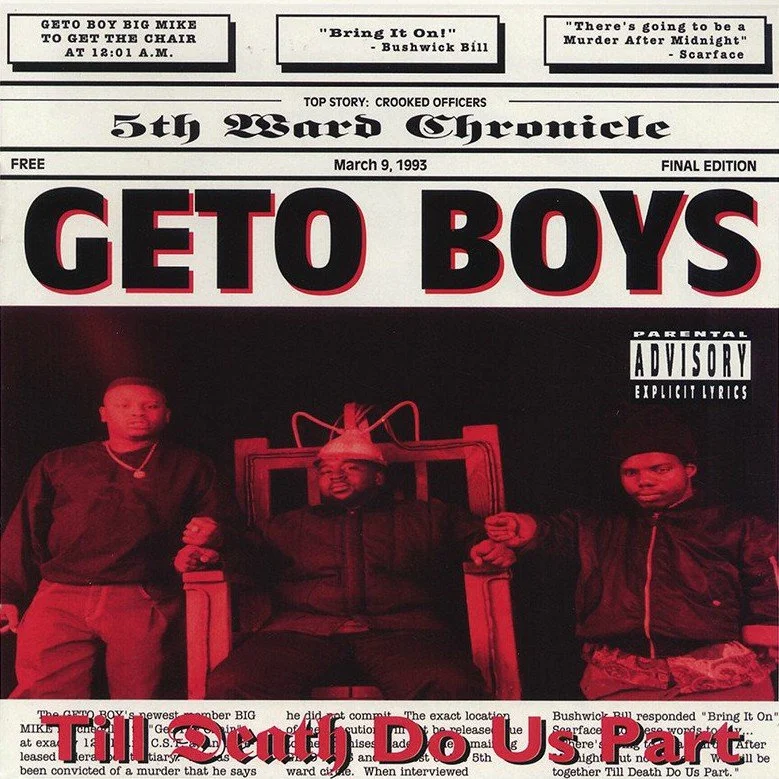
Enjoying this article? Click/tap on the album covers to explore more about the Geto Boys:
However, sandwiched in-between those solo tracks is “Fuck A War,” a delightfully belligerent and politically charged track. Recorded during the build-up to Operation Desert Storm, Bill uses three verses to berate the US Military Industrial complex. By Bill’s own admission, Willie D, whose uncle served in Vietnam, provided a lot of assistance in writing the track. According to Check The Technique, Bill said, “[Willie D] asked me for footnotes of an opinion, but I would say he carved out the novel by himself.” The absolute raw anger present in the lyrics indicates that Willie D laid the song’s groundwork, as Bill rages, “'Cause two suckas can't agree on something / A thousand motherfuckers dying for nothing.”
It’s amazing how much of the song still feels oh so relevant today, given the current hostilities in the Middle East, and with an even more incompetent commander-in-chief in charge. When Bill thunders, “I ain't getting my leg shot off / While Bush's old ass on TV playing golf,” you could easily switch out the reference to the 41st president for the mentally enfeebled dotard currently occupying the Oval Office. Ditto for Willie D’s bellows of “I ain’t going to war for no shit-talking president!”
We Can’t Be Stopped was also Rap-A-Lot’s “kick in the door” statement. The group had been releasing material throughout the 1980s and early 1990s but drastically increased its output in the subsequent years. The imprint seemingly flooded the market with albums from many Houston-based artists from 1992 through 1996 or so, seemingly funded at least in part by this album. Rap-A-Lot’s success became the blueprint for other Southern independent hip-hop labels like No Limit, Suave House, and Cash Money.
As for the Geto Boys themselves, even though We Can’t Be Stopped was the pinnacle of their commercial success, the group went through another lineup change. In this case, apparent personality clashes between Willie D and Bushwick Bill led to Wille leaving the group. While he (and Bill) recorded a solo album that Rap-A-Lot would distribute in 1992, Big Mike of The Convicts would join the fold for an album.
We Can’t Be Stopped set much into motion for the Geto Boys as a unit, the individual members of the group, and Rap-A-Lot as a label. I can’t imagine Scarface building the career that he has today without the recording of this album. Nor can I imagine Rap-A-Lot becoming as much of an institution as it would become, without its success. It’s a great album that led to even more great things. Which is the best type of great album.
Listen:
