
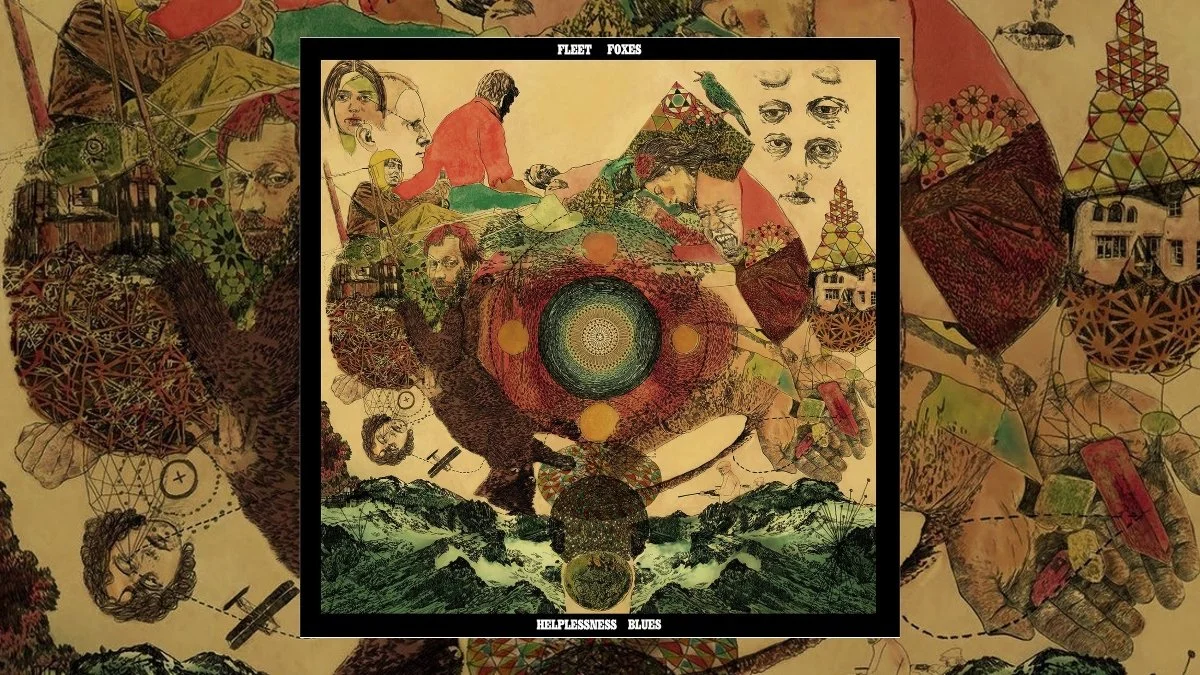
Happy 15th Anniversary to Fleet Foxes’ second studio album Helplessness Blues, originally released May 3, 2011.
Three weeks ago, I regretted taking this article. I’d been listening to Helplessness Blues and hating it. At one point, I muttered, “If I have to listen to one more of these goofy interludes, I’m going to lose my goddamned mind.” Another time: “This lyric about apples sounds like the kind of lyric you write if you’re trying to make fun of Fleet Foxes.”
But I like this album. I’ve liked this album for years. The opening electric guitar on “Montezuma” is a beloved sound. For some reason, I soured on it quite hard at exactly the wrong moment.
Why did this happen? I think I was looking for something that wasn’t there. In comparing Helplessness Blues to its self-titled predecessor, I was missing those standout moments: the round of “White Winter Hymnal” or the pulsing, almost aggressive vocal delivery of “He Doesn’t Know Why.” The debut has a clarity and, frankly, accessibility that the follow-up traded in for subtlety and meandering forms.
Helplessness Blues is the opposite of an impressionist painting: the further away you stand, the less sense it makes. You have to get really close. When you get to know the subtle peaks and valleys or think about the record’s sonic signature across all twelve tracks, it becomes a striking, unified, challenging work.
The record’s labyrinthine quality is directly tied to the lyrics. In the title track, singer and lyricist Robin Pecknold rejects the temptation to be a lone genius and embraces the idea of being part of a larger community. But, surrendering his individuality, he’s bewildered and is unsure of how to proceed—the titular “helplessness blues.” The darker, more disorienting turn taken on Helplessness Blues reflects this sense of wandering. Without the clarity of a Single Voice, how can we make sense of all of these layered instruments and forms?
Listen to the Album:
In my Period of Resentment a few weeks ago, my frustration hit its zenith when confronted with a wall of oohs. I’m not sure which wall of oohs it was, because Helplessness Blues is lousy with them: the wordless vocal harmonies that Fleet Foxes treat as an additional instrument. The oohs have no edge; as instruments, an ooh lacks the percussive attack of a plucked guitar string or depressed piano key. The ooh emerges fully formed, continuous, ethereal, all-enveloping. Sometimes, like on “Bedouin Dress,” the oohs double the melodies played by other instruments, neutralizing the distinctive beginning of each string. It infuriated me. I lamented, awash in oohs. I drafted an email asking if I could relinquish the Helplessness Blues article. It was I who had the blues. The blues of oohs.
I did not send the email. I chose, instead, to ponder—a very Fleet Foxes thing to do. I realized that my concern was with the clarity of beginnings and endings. With so much of the record coated in one continuous, milky sound, the contributions of individual vocalists, melodies, and even songs start to fade. Our ability to attribute credit and valor to individual instances (like my beloved opening to “Montezuma”) disappears into a wall of oohs, and that can be disorienting for those of us who are used to rewarding the virtuosity and creativity of individual musicians. Sounds a lot like being “a functioning cog in some great machinery serving something beyond me.” The record is de-emphasizing individual contributions to the sound.
This is all especially strange, given the calamitous collision of personalities that happened behind the scenes in the creation of Helplessness Blues. Pecknold has called the recording and touring process “dysfunction[al]” and “trauma[tic]” owing to the tensions between him and Josh Tillman (a.k.a. Father John Misty), who was devising a solo career and departure from the band. (See “Well, You Can Do It Without Me” off 2012’s Fear Fun for Tillman’s side of the story.)
I could not be less interested in adjudicating the disagreement between these two gentlemen, but it seems clear that they each felt disrespected during the album’s production and subsequent tour. It’s very “snowflake distinct among snowflakes,” where each musician was looking to be supported for being the unique artist that they understood themselves to be. Tillman wanted to write and perform his own songs, and Pecknold wanted the support to bring Helplessness Blues to life. The real-life events of Helplessness Blues fail to encapsulate the thesis statement of the title track for the same reason that I was getting fed up with the oohs: we were looking for individuality in a place that demands a mindset built around collectivity.
Enjoying this article? Click/tap on the album covers to explore more about Fleet Foxes:
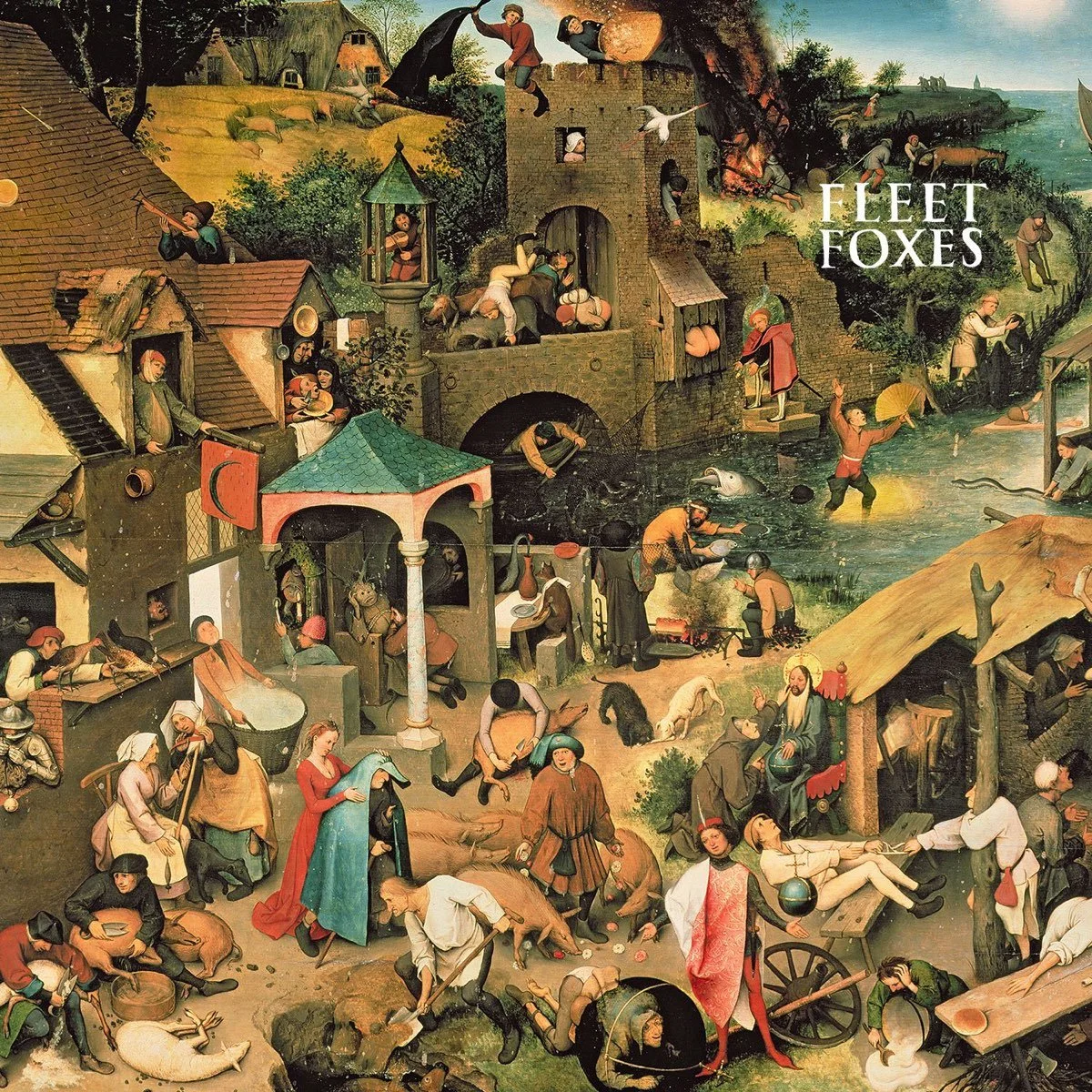
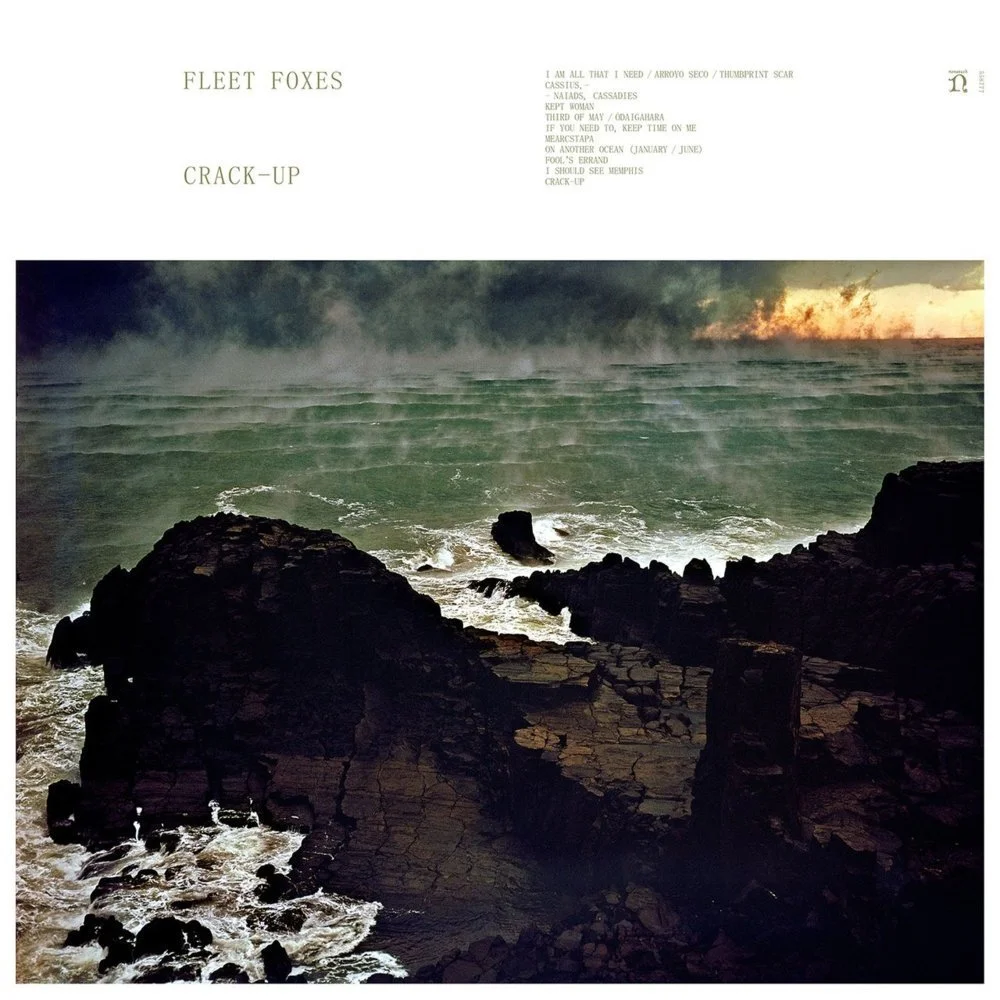
Helplessness Blues is asking us to think about music in a different way than we normally do because it is asking us to orient ourselves to the world differently than we are used to. Pecknold and Tillman could not live this approach in the literal making of the album, which makes me feel a little bit better about my recent frustrations with its insistence on collectivity. Maybe the epiphany on the title track is something we can work toward over time—and maybe then, I will love every single ooh, every single time.
Listen:
