
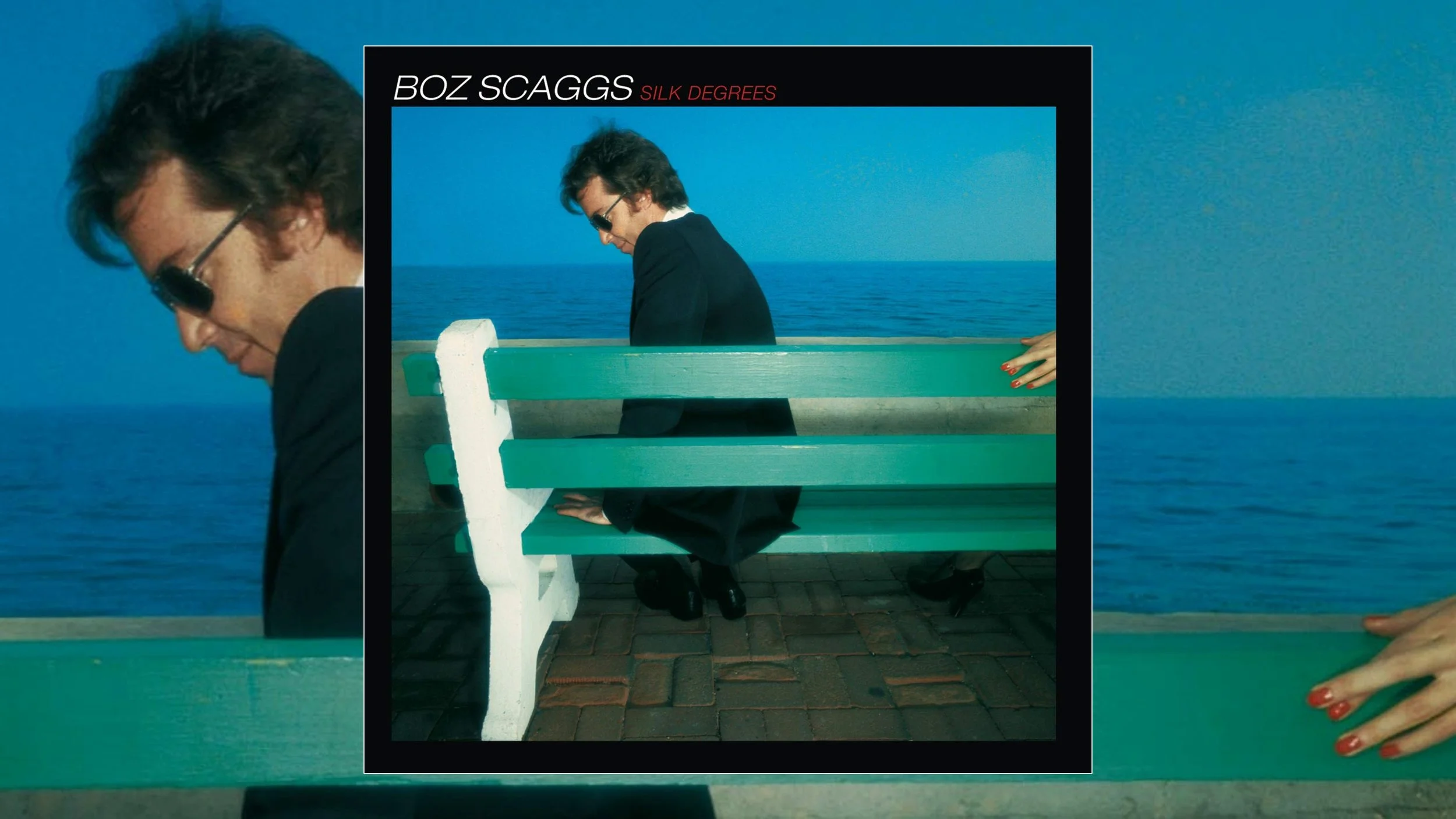
Happy 50th Anniversary to Boz Scaggs’ seventh studio album Silk Degrees, originally released February 18, 1976.
In the spring of ’76, my mom sent me on a mission: go to the local record store and get “that album with that ‘Lowdown’ song by that Boz Scaggs guy.” So, I walked over, grabbed a couple of 45s for myself, then asked the clerk for the album. He handed me this record with a blue-toned photo on the cover. I stared at it and said, “Are you sure this is the right one?” The guy just shook his head and said, “Bruh, I’ve been hearing that all day. It’s the right album.” My mind kind of exploded right there. Turns out, if Jimi Hendrix could rock, Boz Scaggs could definitely get funky.
Silk Degrees, Scaggs’ seventh album, didn’t just top his own career—it somehow caught the mood of American pop right then. The whole scene was up in the air. Disco was taking over, punk was bubbling underground, and singer-songwriters were fading. But Scaggs and his band ignored all that and just did their thing. They made this slick, soulful record that didn’t fit into any neat box.
That’s the secret sauce here. You can’t pin it down. It’s got too much groove for soft rock, but it’s way too polished to call it classic R&B. This is music for grown-ups—people who want some brains with their pleasure, a little twist of complexity with the groove.
And the players? Tight arrangements, top-tier session musicians. Joe Wissert produced it, and he got everything to sound rich and clean without squeezing the life out of it. Every instrument breathes, every vocal nuance pops. The main crew—David Paich on keyboards, Jeff Porcaro on drums, David Hungate on bass were seasoned session players and their sound ended up shaping pop music in the ’80s. Sure, these guys had played on other albums before, but not as a real band. About a year later, they formed Toto.
What’s wild about Silk Degrees isn’t just how many copies it sold (over five million, not to mention all the hit singles), but that it never dumbed itself down. This isn’t music with the edges sanded off. Robert Christgau nailed it when he called Silk Degrees “white soul with a sense of humor that isn’t consumed in self-parody.”
Listen to the Album:
Another thing that sets this album apart is how perfectly it’s sequenced. The whole thing flows like a great night out—energy when you need it, moments to slow down and breathe, then back to the groove. Every song stands on its own, but together they make something even bigger. That kind of care in putting an album together was getting rare in ’76 and would pretty much disappear in the decades that followed.
The record kicks off with “What Can I Say,” a mid-tempo groove that lays down the whole vibe. A sophisticated rhythm section, punchy horns, and Scaggs singing about love with just the right amount of world-weariness. The arrangement feels simple but there’s a lot going on—layers you don’t really notice until you listen close. The guitar weaves around Scaggs’ vocals, the rhythm section locks in tight, and you just settle into it. It doesn’t try to impress you—it just invites you in.
“Georgia” and “Jump Street” keep things rolling, both total standouts. Then side one wraps up with “Harbor Lights,” the album’s longest and most ambitious track. It starts off shy, almost hesitant, then slowly builds. The arrangement gets thicker, with instruments sliding in and out. There’s a bittersweet, reflective feel to it—a perfect way to close out the first half.
Flip the record and side two brings the hits. Four songs here hit the Billboard Hot 100, but “Lowdown” was the monster. It has remained cool for half a century. Lots of songs from that time sound dated now, but “Lowdown” still works. It just does.
The guitar solo? Louie Shelton nailed it in a single take. David Paich brought him in, thinking he’d fit right in. Shelton later said, “The solo was an improvised thing where they just asked me to fill the spaces... It was all a first take. No punching in, no planning. I just listened and played what felt right.”
And “Lowdown” includes one of my favorite verses—one I still can’t get out of my head: “You ain't got to be so bad, got to be so cold / This dog eat dog existence sure is getting old / Got to have a jones for this, jones for that / This runnin' with the Joneses, boy, just ain't where it's at, no, no.”
“Lido Shuffle” just sticks with you. That riff—so simple, so relentless—pushes the whole song forward, and you can’t help but get swept up in it. This track leans harder into rock than most of the album, with a rougher edge and sharper guitars. It’s tougher, more aggressive, but never loses the polish and class that run through the rest of the record.
Watch the Official Videos:
The album wraps up with “We’re All Alone,” written by Scaggs himself. Rita Coolidge turned it into a Top Ten hit in ’77, but honestly, Scaggs’ version still hits differently.
What’s wild is how good Silk Degrees sounds all these years later. So many records from the mid-’70s feel buried under their own production tricks, but not this one. It’s got that warm, analog glow—clear and detailed, never muddy, never stiff.
Silk Degrees didn’t just make waves when it dropped; it set the stage for everything that came after in that smooth, West Coast sound. People like to call it yacht rock or West Coast AOR, but those labels feel a little cheap to me. This album is more sophisticated than that—there’s a lot more going on under the surface.
Put it on now, and what jumps out is the confidence. These guys aren’t trying to chase trends or force something new. They know exactly what they want, and they deliver it without breaking a sweat. That’s real mastery—making something complex look easy.
Scaggs talked about it years later with Bob Ruggiero of the Houston Press. He said, “It took a year before it really caught hold and broke through, and I was out there with my band on the road the whole time trying to survive. It was an enormous satisfaction to have a hit record, and I wish it at least once for every musician. It had the real effect of letting me continue to play, but now to many more people.”
Fifty years on, Silk Degrees is still the gold standard for anyone trying to make music that’s slick and soulful, that connects with a crowd but still feels personal.
Listen:
