
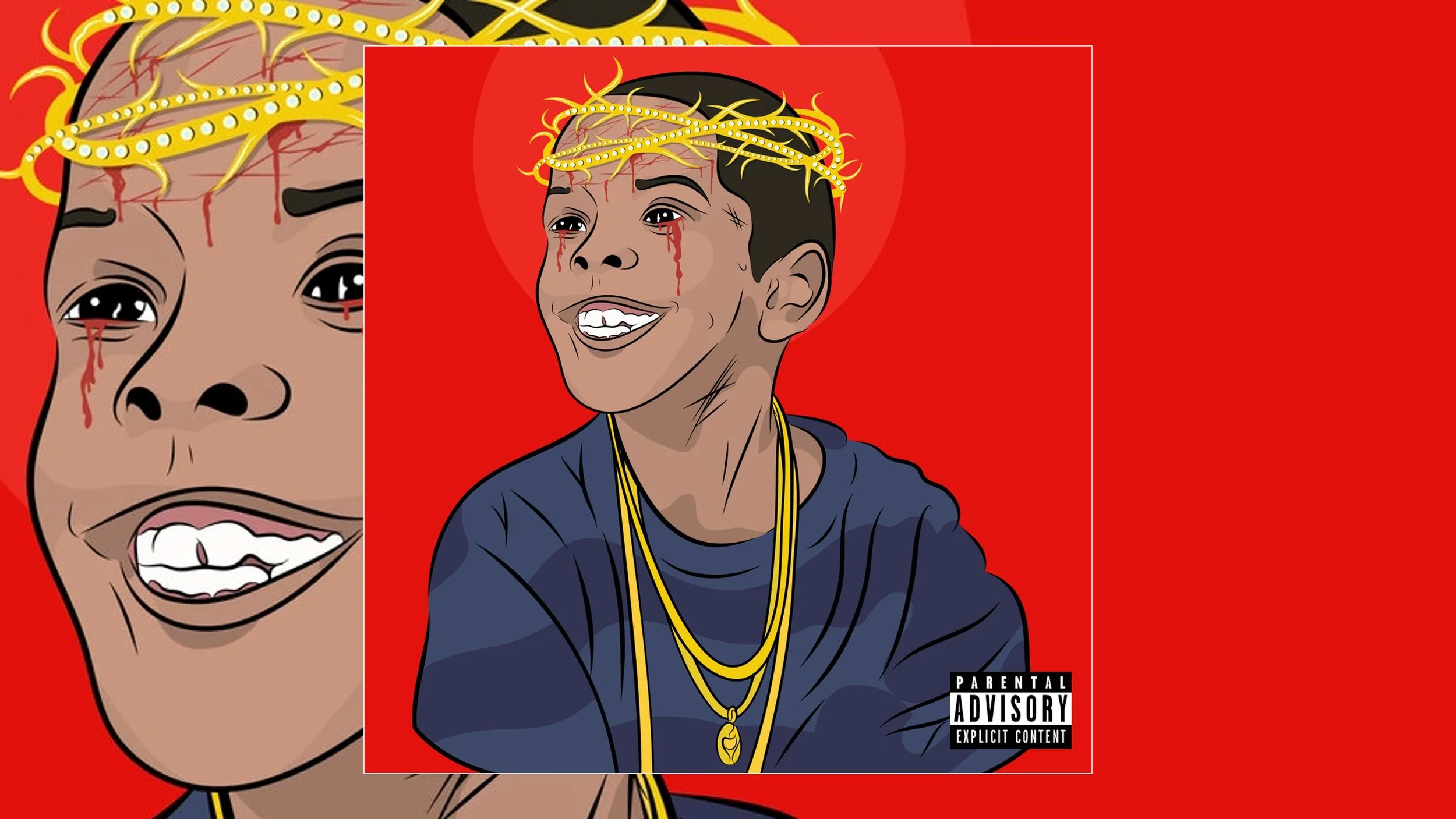
Happy 10th Anniversary to Westside Gunn’s debut album FLYGOD, originally released March 11, 2016.
If you had told me in 2000 that the Buffalo, New York hip-hop scene would be among the primary suppliers of the style of hip-hop that I’d grown up loving, you would have been met with a blank stare. I probably wouldn’t have believed it if you had told me the same thing in 2010. And yet here we are, as we’re into the second quarter of the 21st century now, with emcees from the Queen City, close to 400 miles north of hip-hop’s birthplace, serving as the musical heirs to artists like Kool G Rap, Mobb Deep, and the Boot Camp Clik. And leading this scene is the Griselda collective.
Griselda is clearly a family affair, built on the foundation of banging hardcore hip-hop. It’s led by mastermind Alvin “Westside Gunn” Worthy. Joining him are his paternal half-brother Demond “Conway the Machine” Price and cousin Jeremie “Benny the Butcher” Pennick. The trio, along with Marchello “Machine Gun Black” Lowry, Benny’s brother and Gunn and Conway’s cousin (R.I.P.), are the primary architects of Buffalo hip-hop.
One of Griselda’s most important albums is FLYGOD, released 10 years ago. Pioneering artists like Roc Marciano and Ka may have been some of the first artists to help bring rugged and raw hip-hop “back” into acceptance, but Gunn and the rest of Griselda cracked the code on how to make it into a powerful “brand.” It’s among the best albums of the 21st century.
FLYGOD isn’t the first project Gunn ever released. Griselda as it’s known now had been building a following throughout the early to mid-2010s. Gunn was already three installments deep into his Hitler Loves Hermes mixtape series by the time FLYGOD dropped, while Conway and Benny each had been recording and releasing their own mixtapes at a healthy clip. Gunn and Conway had even put out a pair of critically acclaimed projects in 2015, Hall & Nash and Griselda Ghost.
FLYGOD was the culmination of these efforts, and the functional end of Gunn and Griselda’s beginning. With it, Gunn and the crew established a proof of concept that would chart the collective’s trajectory for the next decade. And though FLYGOD’s sound was rooted in Griselda’s reverence for hardcore, street-themed 1990s era hip-hop music, Gunn did not merely try to emulate what others had done before. The project sounds unique, a logical next step in the evolution of the music that influenced Gunn and crew.
I was truthfully late to the Griselda party. I only really got into the collective in 2018, as they were already well on the way to becoming household names for hip-hop fans, backpackers and otherwise. But as I poured through their many projects, FLYGOD immediately grabbed me. There’s an argument to be made that it’s the best Griselda-related album ever released.
As an emcee, Gunn has a distinctively high-pitched voice and an off-kilter flow. The ad-libs he sprinkles into his raps have become well-known (“Brrrrrrt!!!” “Boom-boom-boom-boom!”). Gunn apparently did not intend to be a full-time rapper, initially serving as Conway’s manager, but changed course after his half-brother was shot multiple times. Gunn makes the most of his talent, often relying on his panache instead of dazzling wordplay.
Listen to the Album:
FLYGOD’s production is also extremely central to its success, and Thomas “Daringer” Paladino largely guides the project’s tone. The Buffalo-born producer had begun working with Gunn since the first Hitler Loves Hermes mixtape (2012), but really established himself by producing the entirety of Conway’s Reject 2 (2015), still in contention for the emcee’s best album. Daringer provides the beats for over half of FLYGOD. His production stylings are influenced by the dark, sample-based, boom-bap productions of the 1990s, layered in musical grit, eschewing the soulless sound used by many of the artists at the time.
Gunn revels on the raw, grimy aesthetic on tracks like “Hall,” produced by Roc Marciano, juxtaposing references to violent crime to high fashion over a sped-up vocal loop. “Chine Gun” is a thematic dedication to his deceased cousin, where he delivers lackadaisical fly shit, backed by a smooth horn track. “55 and a Half” is one the few songs with a traditional hook, but Gunn still kicks a singular verse to crackling drums and warped strings.
FLYGOD also showcased the other talent within Griselda, especially on the lyrical side. Conway appears on three different songs, starting with the album-opening “Dunks.” The track is one of the best songs in the Griselda catalogue, with both emcees delivering rugged verses to a gritty string-loop. Conway gives a star-making performance with his lengthy verse, admonishing “weird” rappers and boasting, “I'm on my motherfucking job / These n*****s want to be king, but what's a king to a god? I’m really 'bout that action, homie, that ain’t no façade / In the booth, I’m DeAndre Jordan catching the lob.”
Gunn and Conway engage in some tag team action on “Free Chapo,” going bar for bar to a grim sample from a Japanese film score. Gunn teams with cousin Benny the Butcher on “Shower Shoe Lords,” a rugged ode to mid to late-90s rugged NYC street rap. Daringer’s production ability stands out as he hooks up the best DJ Premier beat not actually produced by DJ Premier.
“King City” was the introduction of many to the talents of Mach-Hommy and Tha God Fahim. It’s one of the earliest appearances of the New Jersey born, Hattian raised Hommy, who first broke through with a verse on “Beloved” from Reject 2. The elusive emcee continued to build intrigue with his verse, which would set-up the release of his debut Haitian Body Odor later that year. The Atlanta-based Fahim provides a minimalistic track, laying a jazzy vibraphone sample over a thumping drum break. The track also features a furious scratch outro by DJ Q-Bert, the legendary Bay Area turntablist, who demonstrates that the years had not dulled his remarkable hand skills.
Westside Gunn does collaborate with others outside the Griselda camp throughout FLYGOD, including an array of forward-thinking emcees and producers who assist on making the album top tier. Queen’s emcee Meyhem Lauren and Detroit’s Danny Brown contribute distinctive verses on the Daringer-produced “Over Gold” and “Bodies On Fairfax,” respectively. “Over Gold” is one of FLYGOD’s most rugged tracks, evocative of some Hell On Earth (1996)-era Mobb Deep shit.
Your Old Droog contributes a verse to another of FLYGOD’s best songs, “Vivien At Art Basel.” It’s the smoothest track ever associated with the Griselda cam, as producer Camouflage Monk loops up the intro to Les Mcann’s “Roberta.” Droog channels many an underground emcee’s urge to connect with the audience, as he envisions that the “[f]irst time we perform this at a gig they might / Lose their minds, start a mosh pit / Security will try to squash it / Touch a fan's hand, he’ll never wash it.”
Detroit-based producer Apollo Brown had originally hoped to record an entire album with Gunn, sending him 25 beats for him to sift through. They weren’t able to work out the business to do a full project, but they did agree to appear on each other’s forthcoming project. Westside recorded a verse for “Triple Beams,” which would appear on Brown’s Grandeur (2017), while Brown laced a vintage dusty soul track to Gunn that would become “Mr. T.” Gunn delivers more accounts of rugged street life, pulling “drive-bys out of Teslas” and declaring himself a “killer designer, a serial killer / N****s thought I was just rhyming iller.”
“50-Inch Zenith” features production from Statik Selektah, who has spent much of his more than a quarter-century career being ahead of the curve. Selektah does his thing behind the boards, chopping and speeding up a late 1970s soul sample, while Gunn is joined by Brookyln’s Skyzoo on the mic, both delivering solid performances.
Pioneer Roc Marciano pulls double duty on FLYGOD. Beyond his aforementioned production work on “Hall,” he delivers a wicked verse on the sinister “Omar’s Coming,” joining both Gunn and Conway. Daringer hooks up a slowed-down electric guitar sample from an obscure French jazz track. The three emcees drop a quick 8-bar verse, with Roc Marci rapping, “Bitches blow me while the cheese and macaroni cook / Spray the MAC and blow your shit back half a foot.”
The Alchemist, another visionary, provides the backing for the brief lyrical brawl, “Dudley Boyz,” sampling some strings from a 1960s Mexican rock classic. Gunn shares the track with Action Bronson, each delivering a single verse. Their styles mesh well, with both using off-the-wall and occasionally profane imagery. Bronson starts his verses proclaiming, “I peel steel shit like string cheese / River Monsters playing on the big screen.” Later, Gunn assaults one of his enemies, professing to “pistol whip him so hard, fucked up his dandruff.”
A decade later, Westside Gunn is on top of the world. Griselda is one of the most unique musical “brands” operating. Gunn and the other members of the crew have worked with some of the genre’s biggest stars, and their presence tends to connote good quality hip-hop. All three members of the crew have put out projects through Eminem’s Shady Records and have brought in outside artists to Griselda Records, including the official Griselda family album WWCD? (2019).
Gunn himself has dozens of projects to his name. He also has his hands in the fashion industry, establishing the Fashion Rebels imprint. He also owns and operates the 4th Rope professional wrestling promotion. He’s occasionally announced that he’s got “nothing else to prove,” and has “retired,” only to come back a few months later and release multiple projects.
FLYGOD alone is an amazing centerpiece for any emcee’s career, and if Gunn had decided to never rap again after releasing it, his legacy would have been secure. Fortunately, FLYGOD was the start of the journey, rather than the destination. And in the decade since it was released, it has shaped hip-hop for the better.
Listen:
