
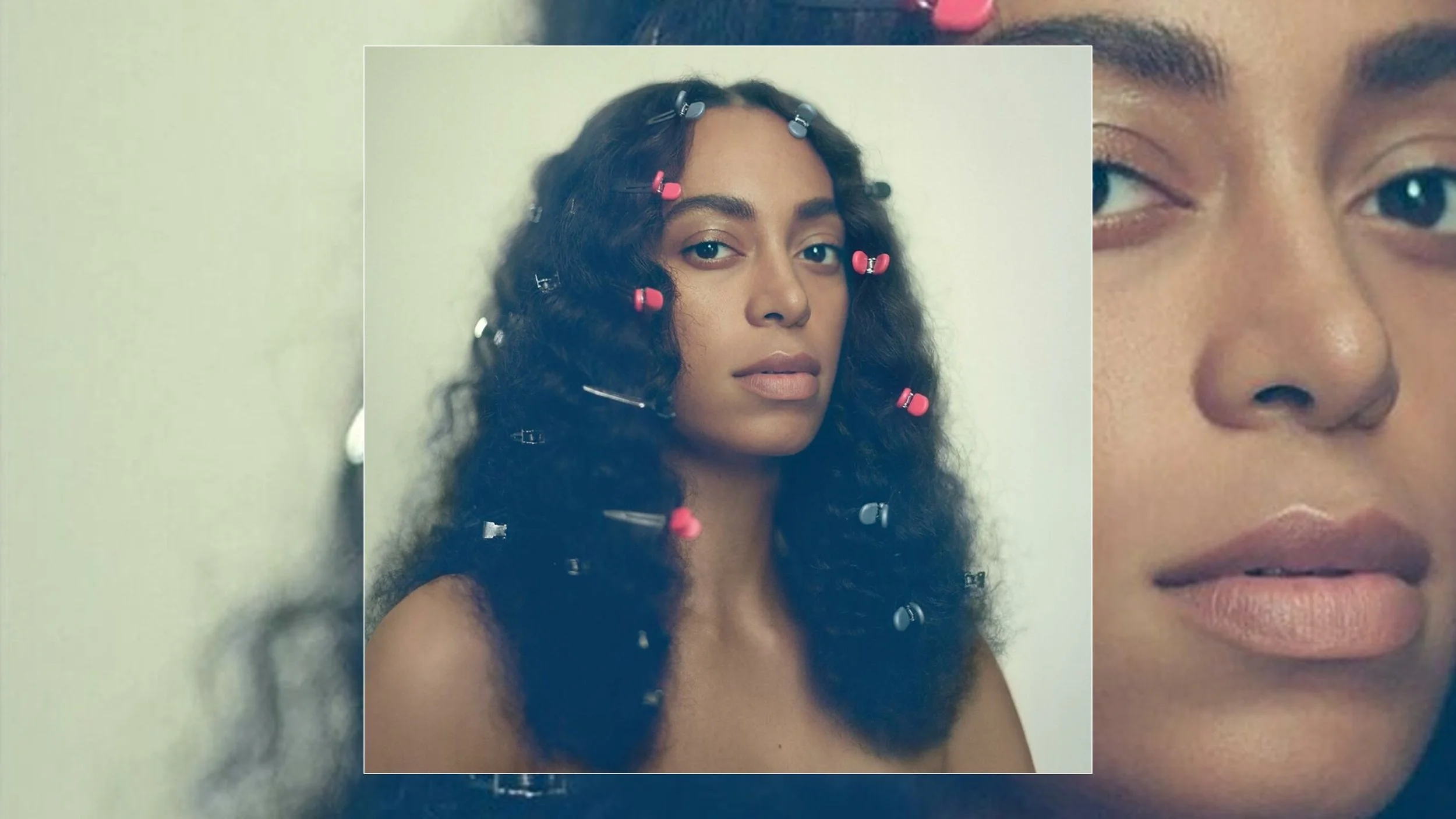
Happy 10th Anniversary to Solange’s third studio album A Seat At The Table, originally released September 30, 2016.
Ten years after its release, A Seat At The Table still feels remarkably private for an album that became such an emphatic cultural statement. Solange was not interested in making herself louder simply to command attention. Instead, she lowered the temperature, narrowed the distance between singer and listener, and created a record in which restraint could articulate fury more effectively than volume.
Her third studio album became her first to top the Billboard 200, but its achievement cannot adequately be explained by chart positions. A Seat At The Table gave emotional architecture to experiences that popular culture had too often expected Black people, particularly Black women, to explain, defend or dilute for somebody else’s comfort.
Its arrival was the result of years rather than months. Solange began writing material as early as 2008, eventually passing through the elegant experimentation of 2012’s True EP and establishing Saint Records before recording the album between 2013 and 2016. That elongated gestation matters because A Seat At The Table sounds considered rather than constructed.
Solange and principal collaborator Raphael Saadiq built much of it from bass, organ, percussion, guitar, feathered harmonies and deliberate pockets of silence. Funk, psychedelic soul, neo soul and contemporary R&B coexist without becoming exercises in nostalgia. The production possesses an extraordinary softness, but softness here should never be mistaken for passivity.
“Rise” establishes that vocabulary immediately. Solange layers her voice until the individual almost becomes communal, before “Weary” settles into organ, bass and guitar as she considers exhaustion not as weakness but accumulated knowledge. Weariness becomes political because even rest is complicated when vigilance has become habitual. “Interlude: The Glory Is In You” pushes the thought inward, proposing peace as something that cannot always be granted externally.
Few songs have understood emotional avoidance with the precision of “Cranes In The Sky.” Written from a period of personal upheaval, its central image came from construction cranes Solange saw interrupting the Miami skyline, their metallic presence becoming a visual equivalent for sadness that refuses to disappear. She catalogues the distractions we manufacture against pain: spending, drinking, travelling, working, sex, changing appearance. None works. The brilliance is that Saadiq and Solange refuse to make the music collapse beneath that recognition. Strings hover, bass moves gently underneath and her vocal remains almost unnervingly composed. The GRAMMY-winning performance hurts precisely because she does not oversell the hurt.
Listen to the Album:
That tension between composure and fury becomes explicit after “Interlude: Dad Was Mad,” in which her father Mathew Knowles recalls racism, segregation and the anger those experiences deposited within him. “Mad,” featuring Lil Wayne, asks who is permitted anger and whose anger immediately becomes evidence against them. Wayne’s bruised verse belongs inside Solange’s argument rather than functioning as celebrity ornamentation. Anger here has history. More importantly, it has reason.
Family voices continue to widen the album beyond autobiography. Tina Knowles’ contribution to “Interlude: Tina Taught Me” rejects the suggestion that pride in Black identity constitutes hostility towards anyone else. Placed immediately before “Don’t Touch My Hair,” her words alter how the song is heard. Solange is not discussing hair as decoration. She is addressing bodily sovereignty, cultural inheritance and the peculiar entitlement by which another person can treat someone’s identity as public property. Sampha’s presence folds gently into an arrangement of electronic detail, funk and exquisitely controlled vocal repetition. The song does not request respect. It defines a boundary.
That distinction is central to A Seat At The Table. Solange rarely sounds as though she is asking permission. “F.U.B.U.”, named for the For Us By Us clothing label, makes that intention gloriously explicit. Featuring The-Dream and BJ The Chicago Kid, it creates a musical space in which Black solidarity requires neither translation nor apology. The surrounding interludes, including Master P’s reflections on ownership and independence, prevent the record from becoming a collection of isolated observations. They connect family history, entrepreneurship, racism, dignity and creative autonomy into one continuous conversation.
Elsewhere, the politics become more interior. “Borderline (An Ode To Self Care)” recognizes withdrawal as preservation rather than surrender, while “Don’t Wish Me Well” carries the strange emotional friction of moving forward while knowing others may resent the movement. Its psychedelic textures feel slightly unsettled, beautifully so.
“Junie” loosens the body with funk while maintaining the album’s consciousness of lineage, and “Scales,” with Kelela, closes the sung portion in a slow, almost suspended state. By the time “Closing: The Chosen Ones” arrives, resolution seems less important than possession of self.
Even the album’s presentation understood that music alone could not contain what Solange was building. Lyrics were paired with photography and imagery in an accompanying digital art book, extending A Seat At The Table into fashion, movement, architecture and visual composition. Its aesthetic influence would become substantial. Solange helped expand the possibilities of what contemporary R&B authorship could look like when an artist controlled not merely the songs, but the complete visual and intellectual language surrounding them.
Watch the Official Videos:
A decade later, perhaps the most remarkable thing about A Seat At The Table is that it never confuses empowerment with invulnerability. Solange permits exhaustion, anger, loneliness, pleasure, uncertainty and pride to inhabit the same person. She understands self-care not as the commercialized language it would increasingly become, but as the sometimes difficult act of protecting what the world keeps attempting to consume.
The title itself remains beautifully complicated. A seat at whose table, and on whose terms? By the end of the album, Solange has quietly dismantled the premise of waiting to be invited. She built the room herself, filled it with family, memory, Black history, vulnerability and music of astonishing delicacy, and decided who needed to understand it.
Ten years later, we are still listening from inside that room.
Listen:
